Clinic Inventory Management system: Top Features and Industry Trends
Quick Summary: The increasing demand for digital transformation is causing inventory management to rapidly change. Cloud technology, automation, AI-driven forecasting and smart analytics, like innovations, make the inventory system more intelligent. This guide explores top features and latest industry trends. Whether you are operating a small clinic. Managing a specialty practice or handling multiple healthcare locations. This information will help you to develop a forward-looking inventory management plan. Read on!!!
Introduction
In today’s healthcare environment, focusing just on patient treatment is not sufficient. Proper management of medications, vaccines, consumables, diagnostic kits, and medical supplies is equally crucial to the efficient operation of any clinic. If inventory controls get weak. Then clinics have to face challenges of stock shortages, expired medicines, unnecessary purchases and operational delays. Its direct impact is not just limited to clinics’ efficiency. It also impacts patient experience and care quality as well.
That’s the reason clinic inventory management is not just an optional process. It has become a core operational requirement. To overcome the difficulties of such complicated circumstances, the Clinic Inventory Management System demonstrates its true values. It’s a centralized platform. It helps clinics track inventory in real time. Monitor stock levels. Automating purchase planning. Additionally, it helps clinics in reducing wastage. It eliminates the limitation of manual records and spreadsheet-based tracking. Make the practices organized. Accurate and efficient.
Top Features of Modern Clinic Inventory Management Systems
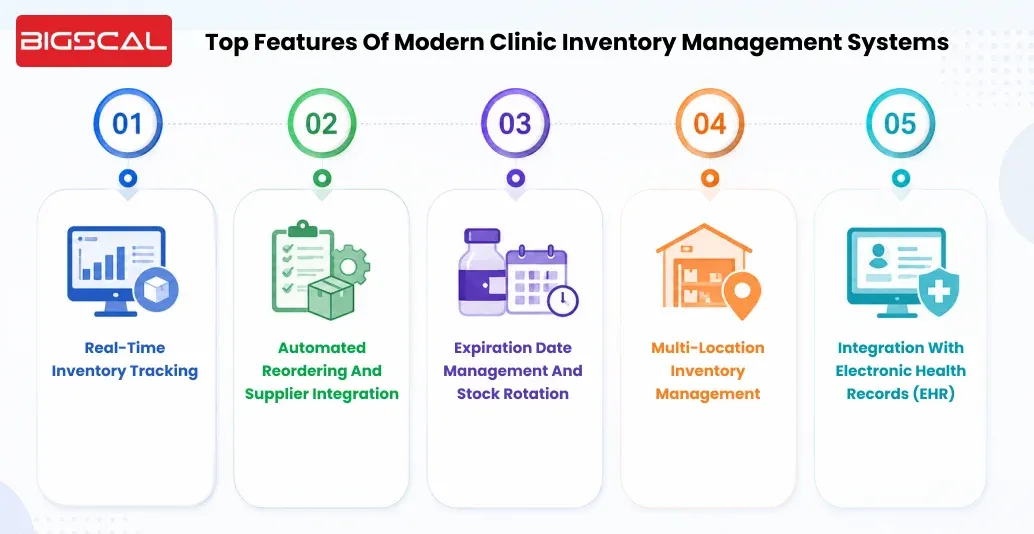
Let’s check out:
1. Real-Time Inventory Tracking
Let’s check some of the remarkable features it comprises:
Automated Reordering and Stock Alerts
Manually monitoring the inventory is not a practical approach for every clinic. Especially when patient volume and supply requirements are continuously changing. Clinic Management System provide automated reordering and stock alerts. When inventory hits a predetermined threshold. Then, the standard system automatically initiates warnings. Additionally, it comes with the following benefits:
- Innovative inventory replenishment workflows
- Proactive shortage prevention mechanisms
- Streamlined vendor ordering processes
- Highly optimized clinic purchasing efficiency
Expiry Date and Batch Management
Ignoring expiry management in healthcare inventory is a costly mistake. Modern clinics’ inventory management systems continuously track medicines. medical supplies’ expiry dates and batch numbers. This helps clinics identify expired products before they get used. It significantly reduces wastage. Additionally, it provides the following benefits:
- Automated medicine expiry monitoring
- Complete batch traceability control
- Minimized product wastage risks
- Strengthened healthcare compliance standards
Barcode and RFID Integration
Manual inventory entries are usually the reason behind human errors and operational delays. Barcode and RFID integration makes the inventory management faster and more accurate. Inventory software automatically tracks every stock movement. This keeps the inventory record always updated. Additionally, it provides the following benefits:
- Contactless inventory movement tracking.
- High-precision stock data capture.
- Eliminate manual logging errors.
- Accelerated day-to-day inventory operations.
2. Automated Reordering and Supplier Integration
Let’s check:
Smart Purchase Order Generation
Creating manual purchase orders is a repetitive and time-consuming process. Modern clinic inventory management system monitors the levels. Automatically generates purchase orders. This makes the procurement workflows faster and more reliable. Additionally, it provides many other benefits. Let’s check:
- Automated purchase request creation
- Faster procurement cycle execution
- Reduced administrative workload burden
- Standardized inventory ordering procedures
Dynamic Stock Threshold Management
Every inventory demand is not the same. Advanced inventory management solutions provide flexibility to customize minimum and maximum stock levels. This helps clinics optimize inventory decisions according to actual usage patterns. Additionally, it offers many other benefits:
- Personalized stock level configuration
- Better inventory utilization control
- Reduced excess stock accumulation
- Demand-based replenishment strategies
Consumption-Based Demand Forecasting
It is cruel for clinics to predict inventory requirements. Modern inventory software analyzes historical consumption patterns. And estimates future demand. This helps clinics indulge in proactive planning. Additionally, it provides the following benefits:
- Provide predictive inventory demand insights
- Enhanced future stock preparedness
- Minimized inventory planning uncertainty
- Data-driven procurement prediction
3.Expiration Date Management and Stock Rotation
Clinic Inventory Management Systems automates expiration tracking. And provide stock rotation if needed. Let’s check more about it.
Real-Time Expiration Tracking
Keeping a manual record of the expiry date is cumbersome. It’s a very fallible process. Advanced inventory systems track expiration dates on products. Provide timely notification to staff. This helps clinics take preventive actions immediately. Additionally, it provides the following benefits:
- Provide continuous expiration date visibility
- Provide early risk identification alerts
- Help in proactive inventory management decisions
- Enhanced patient safety assurance
Intelligent Expiry Alert System
Inventory issues become costly when clinics identify them at the last moment. Intelligent alert mechanisms generate automatic reminders for approaching expiration products. This helps clinics minimize waste. Additionally, the clinic inventory system offers the following:
- Provide timely inventory warning notifications
- Minimized last-minute stock losses
- Better inventory usage planning
- Provide higher operational responsiveness
FIFO-Based Stock Rotation
To optimize the utilization, the FIFO (First In, First Out) methodology is highly essential. Modern-based inventory systems guarantee that the outdated inventory is used up first. Later on, fresh inventory should be allowed to be utilized. Additionally, the clinic inventory system presents the following:
- Provide a structured inventory consumption workflows
- Reduced risk of expired stock
- Better product lifecycle utilization
- Deliver consistent inventory turnover efficiency
4. Multi-Location Inventory Management
A multi-location system displays all the inventory status of multiple branches in a single dashboard. Let’s check more features about it:
Centralized Inventory Visibility
Stock monitoring becomes effective in multiple locations when administrators get a single unified view. Centralized visibility helps clinics track current inventory status in real time. This makes the decision-making faster and more accurate. Additionally, a clinic inventory management system offers many benefits. Such as:
- Provide Unified inventory monitoring dashboard
- Eanble Real-time branch stock tracking
- Faster management decision support
- Help in better operational oversight control
Inter-Location Stock Transfers
Sometimes one branch has excess stock and another has less stock. Modern systems streamline inter-location transfers. This helps them efficiently redistribute available inventory within the network. This eliminates the need for unnecessary external purchasing. Additionally, it offers many benefits, such as:
- Offers seamless branch-to-branch transfers
- Reduced emergency procurement needs
- Better stock redistribution efficiency
- Lower inventory wastage levels
Demand Balancing Across Branches
Demand imbalance is common in healthcare networks. Especially when patient loads suddenly increase at a particular location. Multi-location inventory systems deeply analyze demand patterns. Helps hospitals maintain stock balance in multiple branches. Additionally, it offers the following benefits:
- Balanced inventory distribution planning
- Better response to demand spikes
- Reduced branch-level shortages
- Smarter network resource allocation
5. Integration with Electronic Health Records (EHR)
EHR integration helps clinics in stock tracking. Also build a direct relationship between clinical usage and inventory consumption. Let’s check its features:
Seamless Clinical Data Synchronization
When the EHR and inventory system are connected with each other. Then stock updates automatically get reflected along with patient care activities. This reduces responsibilities for staff on entering the same repetitive information in different systems. Additionally, it offers many benefits:
- Provide Real-time clinical data syncing
- Faster workflow coordination support
- Lower administrative entry burden
- More effective system-wide information consistency
Automatic Medication Stock Updates
It consumes a huge amount of time to manually adjust the inventory count once the medication is approved and delivered. EHR integration automatically initiates this process. This keeps the stock records always updated. Additionally, it provides the following benefits:
- Instant medication stock adjustment
- Accurate treatment-based inventory tracking
- Lessened stock recording delays
- Enhanced pharmacy control accuracy
Clinical Consumption Analytics
Just viewing the stock count is not sufficient. Additionally, clinics should concentrate on identifying the clinical activity that uses the most inventory. EHR integration analyzes usage trends. Helps clinics make tangible decisions. Additionally, the clinic’s inventory management system provides the following:
- Provide Clear treatment consumption insights
- Better demand trend analysis
- Smarter purchasing decision support
- Enhanced inventory forecasting accuracy
Clinicians should track demand trends and supplier response time. This reduces emergency orders and stockouts.
Industry Trends Reshaping Clinic Inventory Management
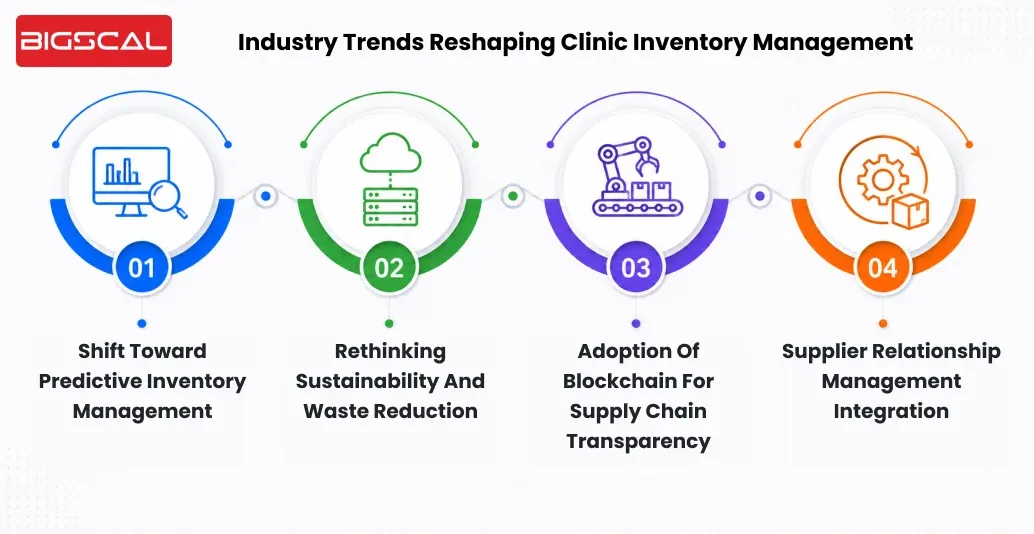
Let’s check out:
1. Shift Toward Predictive Inventory Management
Historical Data Driven Forecasting
Past consumption patterns provide a strong foundation for inventory planning. Advanced system analysis of previous usage records. And estimate the future requirement. Additionally, it helps in the following:
- Accurate demand prediction models
- Better usage pattern visibility
- Smarter replenishment timing
- Improved planning confidence
Machine Learning-Based Demand Analysis
Machine learning algorithms thoroughly study physician prescribing behavior. patient demographics, and treatment trends. Further, it identifies the hidden pattern. This system becomes smarter with time. Helps in predicting advanced inventory needs.
- Adaptive forecasting intelligence
- Pattern recognition at scale
- Continuous model improvement
- More precise inventory recommendations
2. Rethinking Sustainability And Waste Reduction
Sustainable Inventory Management
Clinics must manage inventory from a sustainable perspective. When clinics plan demand according to stocks. This reduces overloading. Reduce expired items. Overall, resource consumption becomes more effective. Also, it provides the following benefits:
- Minimized overstock and spoilage
- More efficient stock utilization
- Lower storage footprint requirements
- Better resource conservation outcomes
Packaging Waste Reduction
In the healthcare industry, packaging waste is a hidden, which create significant issue. Advanced clinical inventory management system helps clinics analyze the pattern of bulk purchasing. optimized ordering. and material usage. It eliminates the usage of unnecessary packaging and disposable material. Further, it provides the following benefits:
- Less single-use packaging waste
- Improved bulk ordering efficiency
- Smarter material consumption tracking
- Reduced disposal volume generation
Green Supplier Selection
Sustainable inventory management is not just limited to internal processes. Environmentally responsible suppliers are being sought by clinics today. They select suppliers that use recyclable packaging. Maintain ethical sourcing standards. Further, It also provides the following benefits:
- Eco-friendly vendor comparison tools
- Better sustainable sourcing choices
- Stronger supplier responsibility standards
- Reduced carbon-heavy procurement patterns
3. Adoption of Blockchain For Supply Chain Transparency
Immutable Product Traceability
- Permanent transaction history storage
- Clear product journey tracking
- Reduced data tampering risks
- Better traceability across networks
Counterfeit Medication Prevention
- Verified medication authenticity checks
- Lower counterfeit infiltration risks
- Safer pharmaceutical distribution channels
- Stronger patient protection measures
Real-time Visibility Of The Supply Chain
- Shared supply chain transparency
- Faster status verification updates
- Better cross-party coordination
- Improved logistics monitoring accuracy
4. Supplier Relationship Management Integration
Collaborative Demand Planning
Accurate demand planning is highly important to maintain the right stock levels. This will help clinics avoid overbuying and shortage situations. Further, it provides the following benefits:
- Shared visibility into future supply needs
- Reduced stockout and overstock risks
- More accurate purchasing forecasts
- Better alignment between usage and supply
Performance Monitoring and Vendor Evaluation
Long-term supplier success depends on consistent performance measurement. Modern clinics’ inventory management systems accurately track vendor reliability. responsiveness and service quality. Additionally, it offers some benefits; let’s check:
- Provide Data-driven vendor assessment
- Improved supplier accountability
- Easier contract renewal decisions
- Better long-term partnership management
Clinics should regularly review supplier data. This strongly affects hidden delays and pricing changes in procurement.
Conclusion
Clinic inventory management systems have evolved from basic stock-tracking tools to intelligent and strategic platforms. This system is not just limited to supply count. It improves operational efficiency. Support patient safety. Help clinical leaders make better decisions. Inventory management is a necessity in a complex healthcare environment. Clinics that invest in these directions. They perform better in the long run.
FAQ
Can an EMR solution improve patient care quality?
Yes, EMR software helps you improve patient care quality. EMR solutions provide complete patient information to doctors. This assists in helping clinics make informed and accurate decisions. Timely alerts of Drug interactions, allergies, and contraindications strengthen medical safety.
Why is it essential to partner with EMR software development companies?
Partnering with a reputable and dependable EMR software development company will simplify your healthcare transformation. Making it Safe. Reliable. Versatile. These companies comprehensively understand healthcare-specific specifications. And build bespoke, Flexible and trustworthy EMR solutions for hospitals and clinics. That greatly enhances their operational efficiency.
Which is the best EMR software development company in 2026?
Healthray is the best EMR software development company in 2026. Healthray emr features are outstanding. It can automate all the hectic operations of hospitals and clinics.
Can small clinics partner with Heathray, an EMR software development company?
Yes, Heathray EMR solutions are affordable. Even small clinics running on a low budget partner with Healthray EMR software development company. Healthray helps small clinics to automate all their daily workflows.