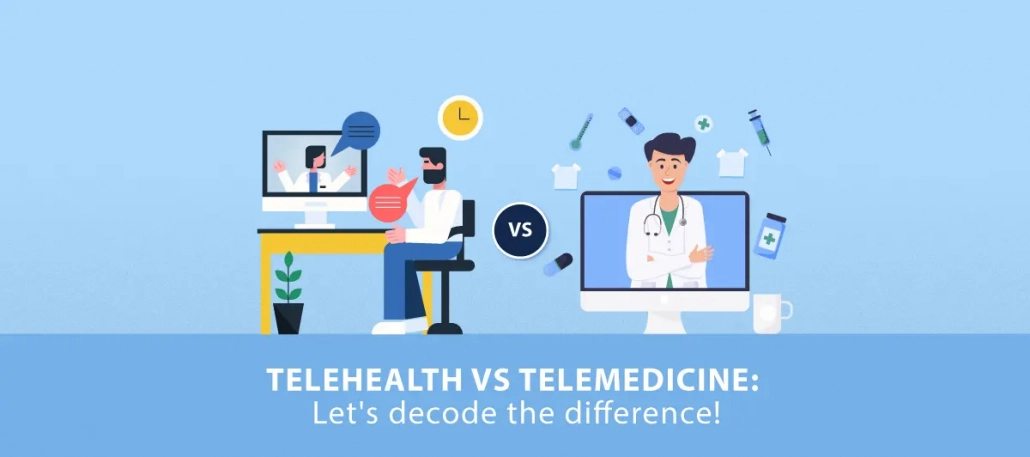
Difference Between Telehealth and Telemedicine
Quick Summary:Want to know the difference between Telehealth and Telemedicine? Telehealth and telemedicine are both commonly used terms in the healthcare industry. In 2026, most hospitals prefer the term “telehealth.” The term “telehealth” represents a broader digital healthcare ecosystem. Both are related but are not the same. This blog explores the difference between Telehealth And Telemedicine and which term hospitals should focus on. Keep reading!!!
Introduction
People generally prefer using the term telehealth, and telemedicine terms interchangeably. But there are differences between telehealth and telemedicine. It might be okay, as per many posts or blogs. And many well-known figures in the healthcare sector frequently follow this pattern.
However, if you look closely at the definitions of these phrases, there is a distinction. An alternate way to mention things is crucial. These non-medical services can include virtual clinical meetings, continuing medical education and training and health checkups. The pandemic is the main reason Telemedicine impacted healthcare in such a huge manner.
By this blog’s end, you will understand the difference between Telehealth and Telemedicine. It will also inform you about different meanings and why they should be used separately.
What Is Telehealth?

The main difference between Telehealth and Telemedicine is that it encompasses telecommunications technologies for many remote healthcare services.
Hence Telehealth visits can also be about non-clinical services, including training of social workers, administrative meetings and seeking medical education. As per WHO, Telehealth is for monitoring, health promotion, and public health duties.
Moreover, it is worth noticing that WHO utilizes the term “Telematics” to mix both concepts. As per them, this broad term comprises all the healthcare services under Telemedicine and Telehealth. It also includes any communication technology used for carrying out healthcare activities.
But both are equally important to enhance health care access and simplify health care management. Both of these fuel the efficiency of healthcare delivery.
What Is Telemedicine?
As per World Health Organization, Telemedicine refers to using wireless communications to diagnose, chalk out treatment plans and prevent diseases and injuries irrespective of geographical location. Hence it involves using video chat or audio communication to contact healthcare providers. These services aim to deliver health care remotely using online video chat or audio communications. It involves virtual visits between healthcare providers and patients for diagnosis and treatment.
Some common examples of Telemedicine include phone-based consultations and visits using video chats through wireless communication technologies. Telemedicine platforms include behavioural health, urgent care and chronic care.
With the aid of this technology, a qualified health care professional can deliver treatment regimens to assist patients in managing their health without requiring them to attend a clinic or a regular physician in person. using remote patient monitoring, chronic conditions or follow-ups can also be managed using telemedicine.
What Is The Difference Between Telehealth And Telemedicine?
Telehealth services include Telemedicine and more, which is a key distinction between them and Telemedicine. When you talk about telehealth, it encompasses much more than just virtual doctor appointments. It includes medical consultations and all the processes in healthcare facilities. Hence Telehealth consists of all healthcare activities that happen using digital technologies.
Telemedicine is a kind of Telehealth. It includes healthcare services delivered by healthcare providers to any patient online. Hence it is just a virtual visit with your health care provider with real-time interaction. In those telehealth visits, the provider is not physically present.
Hence Telemedicine can be considered a telehealth service, but Telehealth is a broad term that consists following:
- Provider training for healthcare
- Conducting administrative meetings for organizations like hospitals
- Communication among providers
- Continuous medical education for regular providers
- Health tracking devices
Telehealth Vs Telemedicine: Benefits
Benefits Of Telehealth
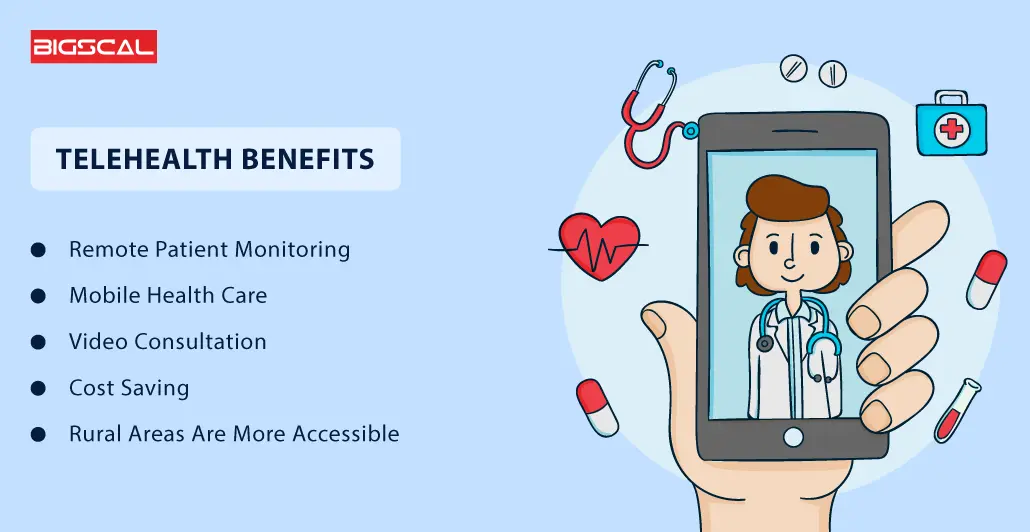
Remote Patient Monitoring
Remote patient monitoring facilitates an unusual way to conduct preventive health checkups. Hence it will eliminate the gap that exists between patient and healthcare provider. By using this technology, physicians can now monitor the improvement in the patient’s health. It also helps them share medical information remotely.
Many devices can record vital signs such as weight, blood pressure and pulse rate. Later you can share this information directly with the doctor. This type of technology is helpful for an expert to sense any abnormality in the patient’s body. These various remote monitoring and clinical services also encourage patients to live a healthy life.
Mobile Health Care
These platforms put forward the patient’s current health status through mobile applications. Hence both healthy people and patients can benefit from it. These apps let patients and supporters provide medical care through communication technologies. This communication can occur through chat, text messages, over-the-phone consultations, etc. E-health offers lots of potential modes of communication. It provides services irrespective of location constraints.
Video Consultation
Live video consultations help patients to get in touch with physicians through video calls and discuss issues. Later they can talk about reports and treatment plans. Hence it could be a great help when physicians from different places come together instead of having different meetings to create the best treatment plan.
Cost Saving
With the help of virtual healthcare companies, hospitals can cut down costs like infrastructure, maintenance and many more while delivering services across the globe.
Rural Areas Are More Accessible
With the help of internet access, smartphones, laptops and computers, regular providers can pay a telehealth visit to rural places. Also, it could save the time that is spent on transportation. Hence no need to unnecessarily travel to deal with typical symptoms.
Benefits Of Telemedicine
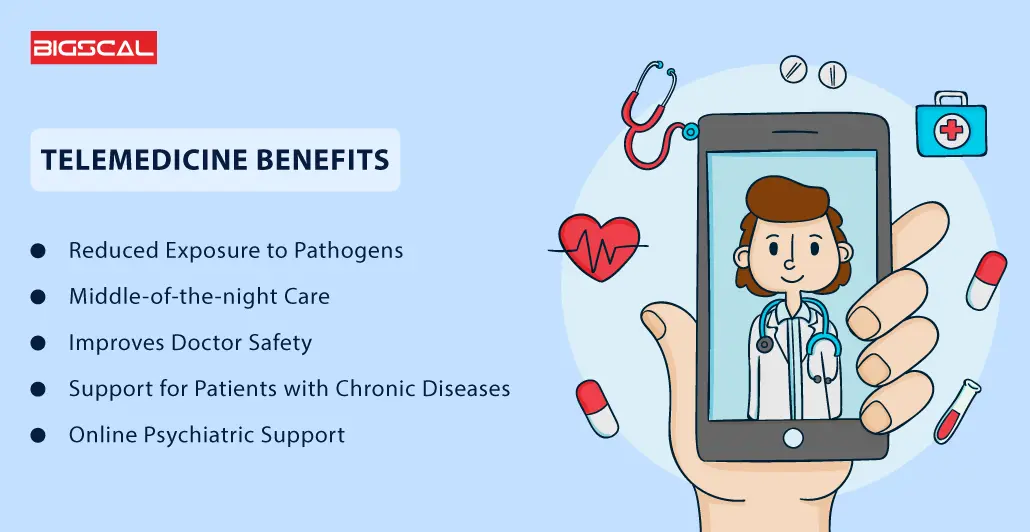
Reduced Exposure to Pathogens
Rather than in-person visits, telemedicine visits eliminate the chances of catching diseases through pathogens.
Middle-of-the-night Care
It offers virtual visits through which one can seek Medicaid services from far places at any time for conditions like high blood pressure.
Improves Doctor Safety
Online chats with doctors about health conditions can be an excellent idea for doctor safety during unwanted situations like pandemics.
Support for Patients with Chronic Diseases
It is one of the most convenient ways to deliver care when a patient is dealing with a chronic disease. It helps them avoid paying in-person visits.
Online Psychiatric Support
It is more beneficial for psychiatric patients. Benefits like social support, personal and medical care, and a great treatment plan can help them recover.
What Are Some Examples Of Telehealth And Telemedicine?
Telemedicine Examples
Examples of Telemedicine include the following health care services presented online but are not limited to it:
- Wellness visits on an annual basis
- Prescriptions by doctors and prescription refilling
- Check up for eyes
- Nutrition and mental health counseling
- Urgent treatment for certain conditions like rashes, infections or high blood sugar levels
- Monitoring remotely for indicators like blood pressure or heart rate
Telehealth Examples
Telehealth is an umbrella term that includes all the examples of Telemedicine along with others like:
A healthcare provider securely sends all patient data, personal health information, electronic health record data, medical history, test results, and X-rays to specialists.
- Healthcare professionals continuing education through online lectures
- Different professionals meet each other through different platforms for patient care
- Employing health tracking technology through mobile devices
- Using applications to seek health information and alert about any disease outbreak
Does Insurance Cover Telehealth And Telemedicine?
Private insurance providers tend to cover a few of the telemedicine services. But know that coverage will ultimately depend on your plan. Hence in some cases, you might be responsible for paying a certain amount for a virtual visit. And you will also have to pay for additional costs like lab tests.
If you have Medicare insurance, you must satisfy specific criteria for coverage for telehealth and telemedicine services. But after the pandemic outbreak, they have increased insurance coverage to all enrolls.
Hence it means if you have an original Medicare plan, it will cover all telemedicine services. It will include visiting providers, psychotherapy, and mental health consultations. Moreover, you might have to pay for Medicare Part B deductible and 20% coinsurance to access these services.
Many insurance coverage plans can provide telemedicine benefits without you even spending any money. The coverage of different plans varies from state to state. Hence it is always advisable to check as per yours.
Know that you don’t always need insurance to get your checkup. The amount for telemedicine services is majorly affordable. Go through different marketplaces to check the best prices. It will help you know about the services they offer, costs and whether they accept insurance.
Telehealth and Telemedicine: Which Term Should Hospitals Use?
Telehealth and telemedicine are both commonly used terms in the healthcare industry. In 2026, most hospitals prefer the term “telehealth.” The term “telehealth” represents a broader digital healthcare ecosystem. Both are related but are not the same.
What is Telemedicine?
Telemedicine mostly refers to remote clinical care where doctors and patients are connected digitally. This mainly focused on physician-patient interaction
Examples include:
- Video doctor consultations.
- Virtual follow-up visits.
- Remote prescriptions.
- Online chronic-care consultations.
What is Telehealth?
Telehealth is a broader healthcare term. It includes non-clinical digital services along with telemedicine.
Telehealth services include:
- Video consultations.
- Remote patient monitoring (RPM).
- Nursing follow-ups.
- Patient education.
- Provider-to-provider communication.
- Virtual care coordination.
Additionally, telehealth represents the healthcare ecosystem more accurately.
Why Hospitals Prefer the Term “Telehealth”
Modern hospitals don’t just provide video consultation. They manage a complete virtual care program.
Hospitals now offer:
- Virtual clinics.
- Remote monitoring programs.
- eICU services.
- Digital patient engagement.
- Online health education.
“Telehealth” covers all these services. That’s the reason it is considered a more practical and future-ready term.
Telemedicine Still Important
Although telehealth is a broader term, telemedicine is a useful subcategory. Hospitals can use telemedicine terms for the following:
- Billing documentation.
- Physician consultations.
- Specific virtual visit types.
- Clinical-service categorization.
Moreover, this term is useful for doctor-patient encounters.
Better Patient Communication And Branding
Patient-facing communication should be simple and clear. Telehealth provides a more comprehensive digital-care experience.
Patients can easily see what type of services are included:
- Online consultations.
- Remote monitoring.
- Follow-up support.
- Health education.
Additionally, it improves hospital branding and digital-care awareness.
Best Practical Approach for Hospitals
The best strategy for hospitals is:
- Use “Telehealth” as the main program name.
- Use “Telemedicine” for specific clinical services.
For example:
- Telehealth department.
- Telemedicine consultation service.
Conclusion
Telehealth and telemedicine are important parts of digital healthcare. But it is crucial for hospitals to understand the difference. Organizations that adopt a broader telehealth approach are successful in providing better patient health outcomes, improved operational effectiveness and stronger digital-care experiences in 2026. Platforms like Bigscal, a visionary among telemedicine solution companies, wields immense potential in revolutionizing telemedicine app development. Bigscal fortifies telemedicine apps with robust encryption and data security measures.
What sets us apart? Our agile development approach guarantees rapid deployment, adapting to evolving healthcare landscapes.
FAQ
Is Telemed and Telehealth the same?
No, Telemed and Telehealth are not the same. There are differences between telehealth and telemedicine. Telemedicine is a subset of Telehealth. While Telemedicine refers specifically to clinical services provided remotely, Telehealth encompasses a broader range of remote healthcare services, including non-clinical ones like health education and administrative activities.
Is Telemedicine a form of Telehealth?
Yes, Telemedicine is a form of Telehealth. Telehealth is the broader term encompassing various healthcare services delivered remotely, and Telemedicine specifically deals with clinical consultations, diagnosis, and treatment provided at a distance using telecommunications technology.
What is an example of Telehealth vs Telemedicine?
Telemedicine includes video consultations with doctors, remote patient vital signs monitoring, and online prescription services. In contrast, Telehealth extends beyond clinical care and includes services like health-related education, administrative tasks, and remote patient monitoring for chronic conditions.
Is Telemed and Telehealth the same?
No, Telemed and Telehealth are not the same. There are differences between telehealth and telemedicine. Telemedicine is a subset of Telehealth, focusing on clinical care, while Telehealth encompasses a broader spectrum of healthcare services and activities conducted remotely.
Is Telehealth a broader term than Telemedicine?
Yes, Telehealth is a broader term than Telemedicine. Telehealth encompasses a wide range of healthcare services, including remote clinical services and non-clinical activities, while Telemedicine refers explicitly to remote clinical consultations and treatment.