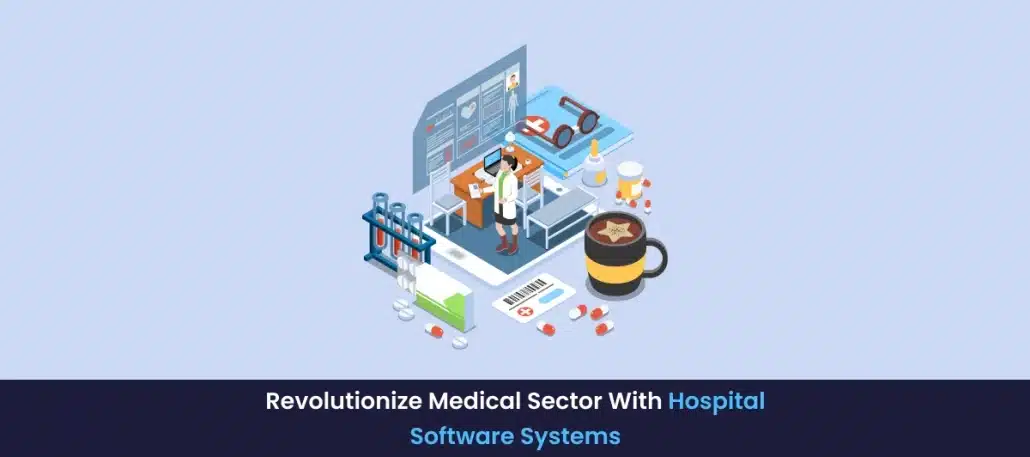
How do Hospital Software Systems Revolutionize the Medical Sector?
Quick Summary: Latest health technology provides an immense shift in the medical sector. It is most useful at the time of covid pandemic. Moreover, it integrates modern care tools that improves medical delivery, heightens productivity, and mitigates Hospital Software Systems expenses. Evolution in the medical sector contributes to the growth of the healthcare industry.
Introduction
Demand of healthcare professionals and patients are persistently amending based on the specific requirement. Formerly, medical practitioners have not invested in electronic health devices due to many reasons such as patients are more comfortable in-person meetings and they have trust issues over digital devices. Also, we can say that there was less adoption of modern technologies due to high procurement costs.
Nowadays, the scenario has evolved. As we observed, everyone is working in a family so they have a shortage of time. Therefore, patients demand for more sophisticated technology. The hospital software systems are the necessary medical tool in the prevalent day. Performing day-to-day operations with utmost precision and extreme data protection.
It mitigates extensive expenses of patient traveling, and clinical costs. Furthermore, it can administer revenue on a regular basis and create a profound way to enhance medical growth. This software can embed with current advancement like wearable devices that act like health tracking apps. Consequently, it improves hospital operations.
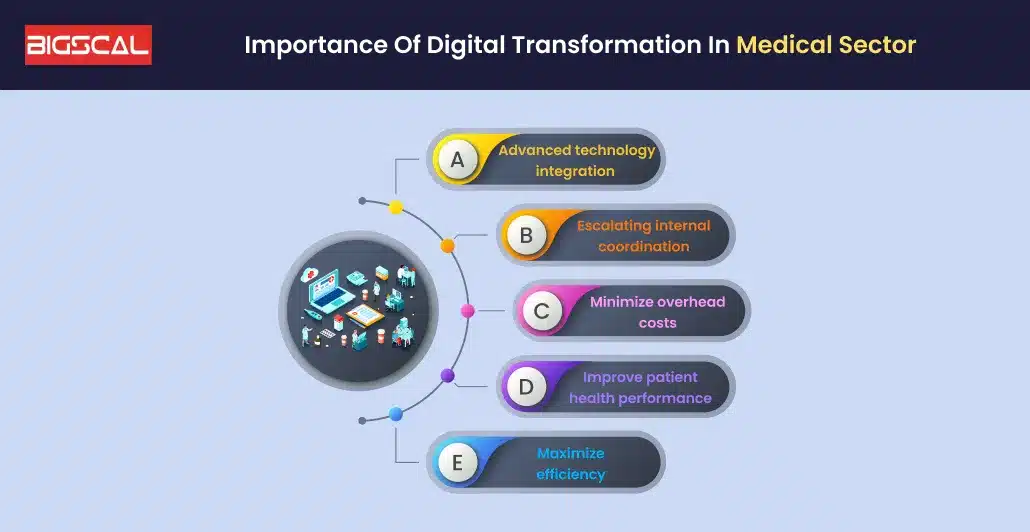
Importance of Digital transformation in Medical sector
Hospital software systems provide a digital shift that improves patient diagnostic procedure, enhancing client experience, and increases analytical power. Moreover, this software can increase the surviving chances of patients, and improve the rate of health recovery. clients are too satisfied with this type of health information technology because it removes unnecessary steps and contributes to enhancing care delivery.
Advanced technology integration
Superior inventions are meant to appreciate and needed to embrace for betterment of society. Furthermore, it embeds AI technology that has extensive potential to reverse procedure, it can advance various medical strategies to enhance patient care and create a strong engagement rate. Moreover, it can fully utilize prevalent technologies, retrieving historical information, and can forecast outcomes. Benefits of technology integration are :
- Accelerated output
- Boosts engagement
- Improve health outcomes
- Enhanced care
- Increases safety
Escalating internal coordination
The segments are internally connected and furnish better medical facilities. Furthermore, it easily provides remote clinical work, which contributes to mitigating costing. Clients have been frustrated and minimize their participation in healthcare, if they don’t receive acute care and queries are not addressed on time. The impacts of escalating internal coordination are :
- Improve customer experience
- Managing queries effectively
- Increases retention rate
- Ease to delegate tasks
- More connectivity with fellow workers.
Integrating the best apps for medical couriers into existing healthcare systems can further enhance the efficiency of hospital operations. These courier apps streamline logistics and ensure timely delivery of medical supplies and patient samples, proving especially beneficial in managing real-time demands within the healthcare supply chain.
Minimize overhead costs
This is embedded with a magnificent feature that is custom templates which can create marketing forms in a few minutes. Moreover, it is more simple to deliver and receive. It mitigates the need of clinical employees as most of work is in the automated mode. In conventional methods, most time is spent on computed individual remunerations.
With the modern healthcare system, it is simpler to generate salary slips. Furthermore, this software decreases the necessity of physical documents such as paper, cabinets, and postage. Additionally, it mitigates printing charges, administrates hospital finances effectively, and reduces operating expenses.This shift is a crucial part of any healthcare business strategy, allowing hospitals to operate more efficiently and reduce overhead costs while enhancing overall financial management.
Improve patient health performance
Electronic medical records software captures broad data, classified information, and tracking effectively. Furthermore, it assists to create enthusiasm among clients towards their health. As a result, they took sensitive health decisions with more precision. This software addresses medical barriers that can maximize efficiency. Explore the advantages of improve patient health performance :
- Maximize quality care
- Better lifestyle
- Improve patient outcomes
- Reduces patients expenses
- Ease to administer client finances.
Maximize efficiency
Primarily, it is crucial to distribute work across departments based on their level of expertise and domain skills. Secondly, the medical data should be audited continuously and modify health services as per patient’s choice. Lastly, it is predominant to satisfy employees and comprehend their needs. Furthermore, the hospital software systems can pursue both conditions effectively. Various ways implemented by hospital software systems including :
- Set well-defined objectives
- Monitor information
- Improve clinical workflow
- Asset management system
- Remote patient monitoring
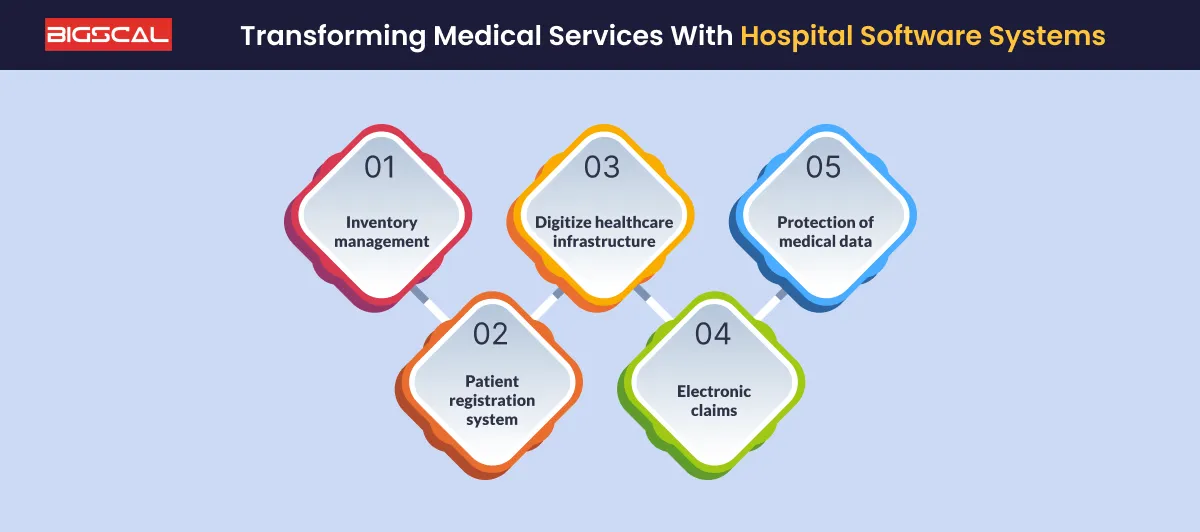
Transforming Medical services with Hospital Software Systems
Electronic health records created a decade ago, still professionals were not completely dependent on it. However, there are major barriers after successfully installing electronic health records. Formerly, it is known to some healthcare organizations due to the poor marketing and it does not cover full features. No doubt, it assists to simplify several tasks but not creating the modern pattern in healthcare. On the other hand, modern hospital management system software is transforming medical services. Here’s how :
Inventory management system
This is the major earning source of healthcare organizations. It aids in making stock decisions quickly. Furthermore, the decision relates to holding stock quantity and purchasing decisions. The medical software helps to analyze the patient’s stock requirement that indicates the current most spreading disease. Similarly, the government takes actions based on analytics reports and saves the patient’s health. Primary advantages of medical inventory management are :
- Saves efforts
- Preserve efficient time
- Boosts client contentment
- Simpler to monitor stock
- Ease to Apply techniques.
Patient registration system
Digital healthcare solutions are the best gateway to retain more patients. Furthermore, it includes a patient registration system that comprises proliferated solutions such as capturing diverse client information and can share data. Hospital management systems use that information to prepare consolidated reports that make it easy to point out any potential threat.
It synchronizes whole health data and easier to find client personal information, whenever it is necessary. The data may be needed for follow up regarding residual bills and claim amount. Moreover, if information is entered, it automatically saves. Consequently, the hospital management system helps to administrate healthcare revenue with precise ledger accounts.
Digitize healthcare infrastructure
Infrastructure has been increased due to development of AI based tools and healthcare apps. Furthermore, it creates an impact on each employee and visiting patients. Most importantly, it can help to scrutinize consolidated healthcare reports and drive instant medical decisions. Assist to execute treatment plans quickly.
The healthcare software solution not only benefits medical professionals but also serves as a central platform for labs, patients, and pharmacies. Furthermore, these innovations can integrate with third-party systems to simplify insurance processing, support medical credentialing services for healthcare providers, and provide authentication for key stakeholders to make informed decisions. Additionally, it lowers client stress levels.
Electronic claims
The claims workflow is too troublesome and needs to redefine the procedure. Moreover, the hospital software systems are here to assist with the best of its features such as medical billing software, medical equipment management software, and remote patient monitoring software. This software stores claiming documents with past billing invoices to compute the amount quickly and share relevant files instantly. Electronic claims has profound impact on medical industry such as :
- Improves processing time
- Enhance patient safety
- Save patient money
- Receive payment promptly
- Intensifying healthcare services
Protection of medical data
As the healthcare infrastructure steadily augments, the cyber threat cases also increase. To save the information, we need the rigorous security that can easily be provided by electronic health record software. Moreover, implement this new innovation in your medical organization and observe drastic change in the employee behavior, patient attitude, and healthcare infrastructure. The following ways are adopted to protect medical data including :
- HIPAA compliant
- ICD -10 code
- Information encryption
- Continuous record tracking
- Record authenticate document.
What are The Best ways to Improve Patient Data?
Improving patient data is not merely a simple work task. It includes various strategies such as creating comprehensive records, instant medical suggestions, facilitating patient engagement tools, constructing creative data reports, requiring an integrated updating tool, reducing medical costs, mitigates waiting time, receive instant reports, and streamline patient workflow.
The hospital software systems safely carry all information and apply governance regulations, which prevent from imposing penalties. Furthermore, information can be accessible to other segments without any disruption or obstacle. Consequently, it creates a better work environment, facilitate meticulous treatment through high tech.
This software constructs intelligence reports that provide assistance to know the risky situation of a disease patient and find a perfect solution. Moreover, it offers a spectacular medical facility that lightens the burden on medical personnel. The EHR software solutions dispense job roles among medical staff in a couple of minutes. Additionally, it implements a specific strategy to supervise financial operations and provide stupendous security across all workflows.
Technical Transformation: Elevating the Modern Hospital Ecosystem
Unified Interoperability via HL7 FHIR Architecture
The main obstacles to quick patient care are data silos. Hospital Management software solutions are built on international healthcare standards, in particular HL7 (Health Level Seven) and FHIR (Fast Healthcare Interoperability Resources) APIs.
Core capabilities should include:
- HL7 and FHIR API support
- Cross-department data synchronization
- PACS/DICOM imaging integration
- Real-time lab result tracking
- Unified patient record access
Operational benefits:
- Less manual data entry
- Faster clinical decision-making
- Reduced duplication of tests
- Better continuity of care
- Improved staff productivity
Intelligent Revenue Cycle Automation & NHCX Claim Routing
Traditional billing workflows slow down manual entry errors. missing documentation and long settlement delay. AI-powered revenue cycle management (RCM) engines in advanced hospital software address these bottlenecks. This automates coding and claims handling.
Smart billing automation should support:
- AI-assisted ICD-11 coding
- NLP-based documentation parsing
- NHCX claim routing
- Cashless pre-authorization workflows
- Faster claims settlement
Why this matters:
- Fewer billing errors
- Lower claim rejection rates
- Faster reimbursement cycles
- Reduced administrative workload
- Better cash flow for the hospital
National Compliance & ABDM Integration
In the modern Indian healthcare landscape, regulatory compliance is not optional. High-ranking hospital software should include the Ayushman Bharat Digital Mission (ABDM) framework. Also, it should have deep, native integration. This helps hospitals ensure secure and standardized digital health exchange.
Essential ABDM capabilities include:
- ABHA seeding and verification
- Secure Aadhaar or mobile OTP-based onboarding
- Certified Health Information Provider (HIP) support
- Certified Health Information User (HIU) support
- Consent-managed data exchange
Compliance benefits:
- Faster patient registration
- Secure health record sharing
- Better regulatory alignment
- Improved trust and transparency
- Seamless digital health connectivity
PACS/DICOM and Cross-Department Data Synchronization
There must be an immediate data flow between imaging, pathology, pharmacy and wards within a hospital ecosystem. Manual transfer of reports from hospitals increases the risk of delay and error.
Synchronization should cover the following:
- Radiology reports
- PACS/DICOM imaging
- Laboratory results
- Pharmacy updates
- Ward and discharge workflows
Benefits of real-time sync:
- Faster diagnosis review
- Fewer communication gaps
- Better continuity of care
- Reduced duplicate testing
- Improved operational coordination
Predictive Logistics and Medical Inventory Optimization
In hospital operations, medicine, consumables, or equipment availability is highly important. Intelligent HMS manages inventory in predictive mode.
Inventory intelligence should monitor:
- Daily consumption trends
- Seasonal patient surges
- Supplier lead times
- Safety stock levels
- Reorder thresholds
Operational benefits:
- Stockouts are reduced
- Emergency purchases decrease
- Inventory planning improves
- Wastage is minimized
- Supply continuity is maintained
Conclusion
The hospital software system is a modern care tool that provides meticulous medical facilities that provide assistance to spread services in the larger area. Furthermore, digital transformation in medical sectors has extensive importance such as it assists in advanced technology integration, escalating internal coordination, minimizes overhead costs, improves patient health performance, and maximizes efficiency. Additionally, it revolutionizes traditional healthcare workflow and provides massive information security.
FAQ
Do hospital software systems integrate with CRM systems?
Indeed, hospital software systems integrate with customer relation management systems. This software supervises patent data, creating fabulous reports, embedded healthcare protocols, and constructs structured information. Moreover, it promptly answers queries within the same platform, provides specific rights to clients, and effortlessly tracks patient’s health.
How do hospital software systems save time?
Hospital software systems have been embedded with high-tech innovations that can control healthcare information. ease the scrutiny of medical reports.retrieve past information. incorporate client engagement tools. and provide strong communication across medical departments. Furthermore, it encourages patients to concentrate more on their healthcare. Additionally, it secures each entry and lightens personnel workload.
How do medical software assist to track patient records?
Tracking patient records involves a sequential procedure such as storing volume of client data along with their earlier data. Moreover, it administers information into methodical format. Furthermore, the information can be represented in pictorial format that aids to drive conclusion and effective decisions. Consequently, it alleviates the need to monitor client records.
Do hospital software systems manage appointments?
Indeed, hospital software systems manage appointments. It simplifies workflow as it begins with more convenient options and then persistently utilized effortless strategies to administrate healthcare systems. Furthermore, they receive appointment requests, reschedule, and cancel appointments on healthcare platforms. Consequently, it heightens patient quality care.
What is a digitized medical workflow?
The digitized medical workflow initiates with the client registration process, which has been done automatically by the user. Booking physician slots through the appointment dashboard at the physician’s available time. Medical practitioners oversee the past reports of patients and compare them with their progressive reports. Write a prescription or treatment plan on the basis of observation on the healthcare dashboard, and prepare a digital invoicing template.
What are the advantages of accurate diagnosis?
Formerly, diagnosis with utmost precision is somewhat an unachievable dream. In the current technological environment, it is attainable with hospital management systems. Furthermore, the efficient management of records aids to provide accurate diagnosis. The accurate diagnosis minimizes processing time, saves time, improves patient care, and aids speedy patient recovery.
Do hospital software systems improve patient engagement rate?
Indeed, the hospital management software improves patient engagement rate. This software involves multitude of attributes including slot booking system, manages health e-logbooks, automatic reports, excellent analytics tools, and digital communication system. Most importantly, it includes client portals and their engagement tools that undoubtedly, escalate patient engagement rate.
What is the importance of digital transformation in the medical sector?
Digital transformation is not a new concept in the medical sector. Formerly, the electronic platform is not more advanced. Nowadays , it includes multitudes of tools that administer each healthcare department. The major changes observed in patient’s attitude and employee contentment level. After installing this software, it cut down the clinical expenses and aids to proper financial budgeting.
What is the significance of data quality?
Maintaining data quality is itself a hard task but not with medical technology. Furthermore, the healthcare software synchronizes information whether it is client data, inventory details, appointment history, finance reports, hospital machine data, and clinical reports. Data quality assists to find crucial information, minimizes errors, and makes medical decisions more promptly than ever.
Do hospital software systems assist to monitor health?
Indeed, hospital software systems assist to monitor health. Mainly, this software is built for monitoring and analyzing healthcare information. Furthermore, it captures enormous medical details from assorted sources and places them together in a uniform manner. Then, it depicts data in pictorial format. Consequently, it saves hospital money, improves patient satisfaction level, forecasts health outcomes, and escalates recovery rate.