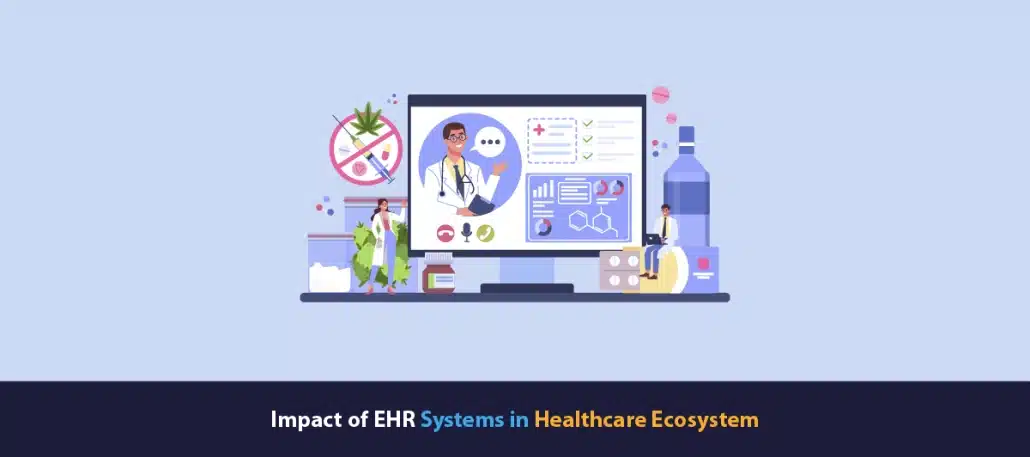
Impact of Smart EHR systems in Healthcare Ecosystem
Quick Summary: Smart EHR systems in healthcare remodeling the medical scenario and improving healthcare practices. Moreover, this software instantly facilitate patient information and manage each clinical activity at the finger tips. EHR systems positively affects those citizen, who are connected with the healthcare system such as clients, policy makers, medical practitioners, insurance companies, and investors. We are assist you to explore more through this article.
Introduction
At present, each patient has shortage of time and wants to save their medical expenses. Similarly, healthcare professionals want to be a part of technological advancement and reduces per visit time that helps to attend more patients in less period of time. Additionally, they entail to improve healthcare quality and clinical practice.
The role of EHR systems in healthcare are too vast and provide benefit to every person, who are associated with the medical industry. Furthermore, this futuristic healthcare model not only improves facilities but also save hefty amount of clinical expenses. Additionally, it improves financial condition of healthcare organization by accurately manage them.
It cuts operational burden of paper maintenance, managing stationary items, find out healthcare information, store client’s sensitive data and manually managing payment processing. Additionally, the EMR software implicate some strategies, which assist to make data more precise and efficient. Therefore, EHR systems in healthcare creates a better ecosystem.
Essential Features of EHR systems in Healthcare
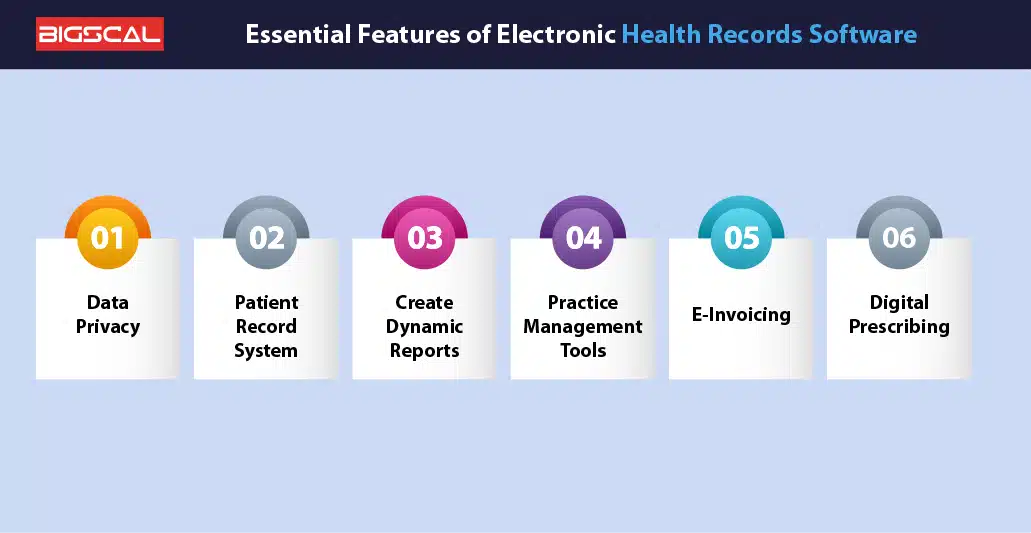
Electronic health records comprises of billing tools, patient engagement tools, operational management tools, personnel management tools, and AI tools. Moreover, it smash all hurdles at the fingertips such as analyzing radiology images, conduct administrative tasks, manages patient visit data, and maintain client’s files. Additionally, it breaks the hurdle of managing storage space. Essential features of EHR systems in healthcare :
Data privacy
Protect information while sharing data, entering information, and organizes information. Moreover, it implement advanced security procedure that shield information from external parties and internal departments. It safeguards for making documents confidential and create data private. The importance of data privacy are :
- Saves patients costs
- Improve healthcare services
- Abide healthcare guidelines
- Reduces patient’s stress level
- Accomplishing patient’s trust
Patient record system
Patients information combined in the system with more precision. Moreover, EHR systems in healthcare assist to recoup medical records from wherever place with any e-device. This software improves high-end care and client contentment with no intense labor. Additionally, it can maintain historical information from allergies to patient’s billing details. Let’s talk about the benefits of patient record system are :
- Quickly transmit information
- Reduces medical flaws
- Enhances accuracy
- Protect delays
- Eliminates redundancy.
Create dynamic reports
Generate informative dashboards that simplifies to comprehend the situation of particular department through visual elements. Moreover, the electronic medical record software makes analysis too interesting and point out only crucial points. Assist to predicts client health and speedily creates treatment plans. Primary advantages of dynamic reports :
- Improved productivity
- Clinical decision support
- Formulating costs strategies
- Prompt stock decisions
- Build strong bond.
Practice management tools
EMR systems embeds with the varied tools to advance clinical practices and medical efficiency. Furthermore, the tools include revenue cycle management, calendar, video consultation, customer relationship management system, digital payment system, and visual intelligence reports. Consequently, it improves healthcare data, implemented advance healthcare technology, and drastically increases company’s reputation. Benefits of practice management tools are :
- Save money
- Improve efficiency
- Advancing clinical system
- Prevent large information
- Streamline administrative tasks.
E-invoicing
Create modernize billing system that improve patient care and reduces clash with vendors as all information are recorded persistently that simplified to monitor and reduces clinical costs. Most importantly, it eliminates conventional paper system to store medical information and other areas of medical activities. It makes billing processing simpler and efficient. The benefits of E-invoicing are :
- Improve healthcare revenue
- Better processing of payments
- Create transparency in medical records
- Saves clinical time
- Enhances client satisfaction
Digital prescribing
With electronic health record, dispenser get prescriptions immediately and send to the patient’s address without delay, which makes the workflow more smoother. Moreover, ensure that pharmacy is selected by patients. Basically, this service is called electronic prescription service (EPS). Benefits of digital prescribing are :
- Improve health care services
- Lower theft risks
- Reduced efforts
- Ease to monitor prescriptions
- Improve workflow
How Smart EHR Systems Affect the Healthcare Ecosystem?
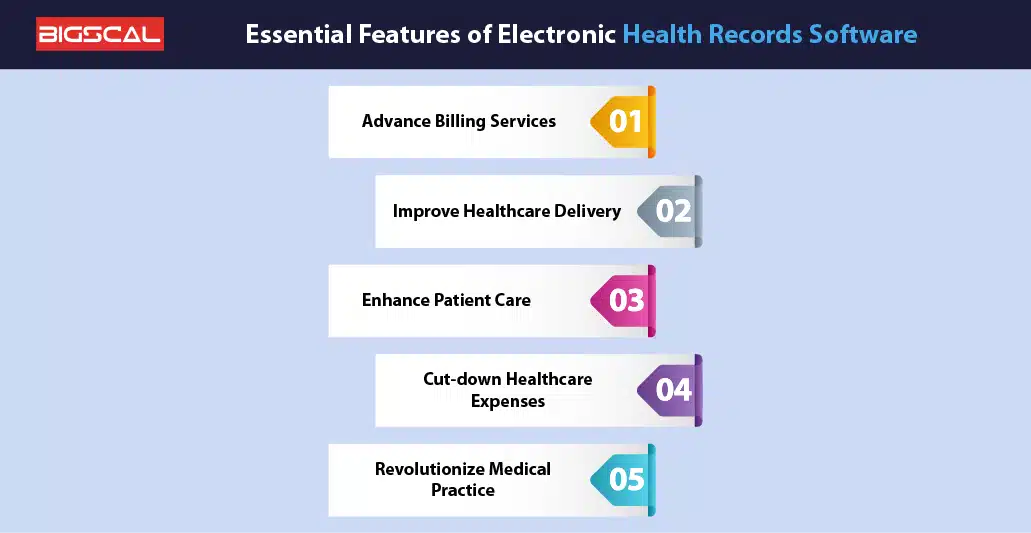
EHR systems in healthcare created a profound history of attending patients and resolve employee queries. Moreover, this software makes easy to integrate any kind of information and other health care systems. Simplifies the insurance process and storing documents. Additionally, it affects the other components of medical ecosystem. Glance on some positive effects of smart EHR systems in healthcare ecosystem :
Advance billing services
For healthcare organizations focused on streamlining processes and reducing operational burdens through EHR systems, it’s critical to also address specialized components of medical billing. A comprehensive understanding of radiology medical billing can identify and solve specific challenges such as undercoding, upcoding, and the need for precise coding systems. This can significantly enhance your revenue cycle management when linked effectively with electronic health records.
The major benefit of EHR systems in healthcare is to modernizes billing services that keep the staff shoulders light and reduces risks. Furthermore, this software improve the way of doing clinical activity and increases efficiency. Adheres latest guidelines while creating bills. The importance of advance billing services are :
- Reduce errors
- Pursuance of billing guidelines
- Minimizes costs
- Aids to manage healthcare accounts
- Utilize money efficiently.
Improve healthcare delivery
If genuinely you need to enhance patient outcomes and technological advancement in the medical delivery, must implement EHR software. Furthermore, it improves clinical efficiency and act as a preventive services for patients. It transforms the clinical workflows and enhancing sense of belongingness with healthcare environment. Advantages of improving healthcare delivery are :
- Improving clinical outcomes
- Reduces patient’s paper chart system
- Enhances productivity
- Satisfy clients
- AI-monitoring
Enhance patient care
Electronic health record system overhaul healthcare services such as advancing patient system, swift to consult patients, revolutionizing diagnosis system, amasses medical information, and make decisions. Moreover, the EHR systems in healthcare aids to draft the resource planning with defined tasks of particular staff and delegated tasks to all of them in a single click. EHR systems in healthcare applying varied strategies to enhance patient care such as :
- No delay in consultation
- Reduces error in medical treatment
- Captures patient’s medical history
- Record massive clinical data
- Patient scheduling system
Cut-down healthcare expenses
Entire clinical workflow that begins by patient’s search and usually, it depends upon the technological advancement in the healthcare organizations and their way of behaviors to treat patients. Moreover, It easily met with EHR systems. It minimizes maintenance expenses on physical documents, necessary items for authenticate it, and makes easy to eliminate disputes.
Consequently, it effortlessly reduces legal costs, improve clinical workflows, minimizes client’s medical costs, and reduces staff requirement for conducting operational tasks. Overall, it advances health system and improving revenue.
Revolutionize medical practice
Electronic health record (EHR) has intermingle with the AI medical practice solutions for reducing the hurdles that are faced by healthcare providers and other clerical staff members. Moreover, it includes modern functions such as patient record system, natural language processing, remote consultation services, and custom reports. Discover how EHR system adoption in healthcare revolutionize medical practice such as :
- Greater coordination with other healthcare providers
- Improving medical efficiency
- Minimizes errors
- Increases employee satisfaction
- Prevent data.
Reduce Medical Errors with Electronic Medical Records
Significant amount of risks happen when there is a minute error in medical tasks. Moreover, mistakes can be made with anyone. We can’t totally avoid it but we definitely minimizes it with the best EHR software that includes innovative strategies. Consequently, it helps to refurbish medical infrastructure and elevating high level of care.
Electronic health record systems contributes to maintain patient records through integrated patient portals. It generate clear documents with proper headings and sub titles. Therefore, it eliminate any confusion, minimize administrative workload, aids to medication management, and simplified to share data. Additionally, it embeds with various healthcare systems and simplified to present medical information with other health care providers.
EHR platforms improves clinical productivity as it increases the patients number and enhances safety. This software solution administrate patient data accurately with determining safety risks. Ultimately, it improves diagnostic process, improving safety, and makes easier to take smart actions by comprehending information.
Driving Next-Gen Ecosystem Interoperability
Ambient Intelligence via Clinical NLP
The biggest operational bottleneck for healthcare professionals is the burden of documentation. Smart EHR resolves these frictions. Secure microphones and advanced clinical NLP models listen to patient-provider conversations. Separate relevant medical details from casual dialogue.
Core capabilities should include:
- Ambient voice capture
- Clinical NLP processing
- SOAP note automation
- Structured chart population
- Real-time documentation support
Clinical benefits:
- Manual charting time is reduced
- Clinician fatigue is lower
- Documentation consistency improves
- Patient interaction quality improves
- Workflow speed increases
Federated Data Architecture & HL7 FHIR Standards
Medical records are only valuable if they can safely flow in the direction where they are truly required. EHR platforms today are no longer isolated. Move from proprietary databases to adopt open-API connectivity. That is based on international standards.
Core interoperability capabilities should include:
- HL7 FHIR API support
- Open API connectivity
- Lab system integration
- PACS/DICOM compatibility
- Unified patient indexing
Operational benefits:
- Patient data is available faster
- Duplicate entries are reduced
- Care coordination improves
- Diagnostic turnaround becomes shorter
- Clinical decisions become more informed
Predictive Clinical Decision Support Systems
Smart EHRs don’t behave like passive archives. They work as active clinical assistants. They help providers make safer decisions during the treatment process.
Automation should support:
- Drug interaction alerts
- Risk scoring
- Abnormal lab detection
- Clinical rule enforcement
- Point-of-care recommendations
Clinical benefits:
- Diagnostic errors are reduced
- Safety checks happen in real time
- High-risk cases are flagged earlier
- Treatment decisions become more reliable
- Long-term patient safety improves
Cross-System Synchronization for Labs, Imaging, and Pharmacy
EHR becomes truly powerful only when it is capable of synchronizing the data across every connected department.
Synchronization should cover the following:
- Laboratory results
- Radiology reports
- PACS/DICOM imaging
- Medication updates
- Discharge and follow-up workflows
Benefits of real-time sync:
- Faster diagnosis review
- Fewer communication gaps
- Better continuity of care
- Reduced duplicate testing
- Improved operational coordination
Security, Consent, and Patient Identity Governance
As data moves across networks. EHR should protect privacy. Should enforce consent. Adept at maintaining accurate identity matching at every step.
Governance features should include:
- Role-based access control
- Consent management
- Audit trails
- Identity verification
- Secure data exchange
Why this matters:
- Patient privacy is protected
- Compliance risk is reduced
- Data sharing remains controlled
- Duplicate identities are minimized
- Trust in the platform increases
Conclusion
EHR systems in healthcare abide by several strategies such as accurately entering data, reducing redundancies, and applying data governance regulations that aids to improve clinical data and making decisions quickly. Moreover, the essential features include data privacy, patient record system, creating dynamic reports, practice management tools, and digital prescribing. It positively impacts all persons who are linked with the medical industry such as advance billing services, improved healthcare delivery, reduced expenses, and modifying healthcare practices.
FAQ
How do EMR systems impact healthcare delivery?
Electronic medical record systems have profound impact on patient care, handling inventories, managing diverse vendors, administrative systems, and administering financial outcomes. Furthermore, this software supports creating accurate treatment plans, managing execution documents like progress notes, and recording treatment reports. Additionally, it improves administrative, financial, and inventory workflows. Ultimately, it increases efficiency.
Which are the crucial steps of selecting EHR systems?
Selecting EHR systems is an arduous task but it is more convenient with crucial steps. Moreover, it begins with the survey of the department and determining the difficulties to accomplish medical tasks. After identifying troubles, time to note down superior hospital software in India. Then, it is crucial to have essential tools such as revenue management tools and cloud-computing systems. Finally, choosing the electronic medical record software.
What are the primary ways of improving healthcare services?
Several factors affect the medical delivery such as patient engagement, clinical information, patients medical history, and medical guidelines. Moreover, the primary ways of improving healthcare services such as improving administrative workflow, maintaining the financial system, precisely analyzing information, well-communicated with medical practitioners, and assimilating data. Therefore, it mainly depends upon the practical decision.
Does the EHR system improve patient's test results?
Indeed, the electronic health record system improves patient’s test results. This software maintains client data in a more informative manner, applying data management strategies like data governance, and generates intelligence reports. Consequently, it makes it easy to prescribe information by analyzing personal health records, and visualizing medical graphical charts aids to predict medical condition, and aids to quick action.
Which is the best medical software company in India?
Bigscal Technologies is the best medical software company in India. This company expertise on varied fields such as aviation, oil and gas, medical, entertainment, transportation and others. In this company, tech resources are highly skilled professionals and manage any type of high-level projects. Additionally, it is not up-to the developing software but also creating mobile applications and e-commerce websites. Mainly, this company’s expertise lies in developing medical software.
What are the five components of electronic health record (EHR) ?
The electronic health record (EHR) helps to maintain hospitals with digital tools for improving healthcare delivery and maintaining accuracy while maintaining documentation. Additionally, it abides with healthcare guidelines such as calibration systems, disposing laboratory samples, and records information in the best possible manner. The major components are finance tools, operational tools, compliance tools, reporting tools, and communication tools.
What is the significance of health information technology?
The health information technology aids to revamping medical workflows and tackle healthcare clients. Moreover, it facilitates a lot of benefits to hospital stakeholders such as patients, pharmaceutical, laboratory, medical providers, and clinical regulations. Additionally, it improves clinical revenue with no crowd in hospitals. It has been possible with the superior electronic health record software.
Does EHR adoption improve clinical outcomes?
Indeed, electronic health record adoption improves clinical outcomes. It has been done by assembling clinical information, categorizing them in the best possible manner, and preparing healthcare reports with amazing graphical depiction. Additionally, it administers personal health records with precise details and manages administrative activities accurately.
What is the importance of healthcare data?
Healthcare data contain client historical data, past appointment information, stock management report, and accountancy documents. Moreover, it needs to assimilate properly to aid in making practical and timely decisions. Consequently, the EHR scheduling software improves administrative workflows, healthcare infrastructure, properly manages hospital profit, and improves patient engagement.
Which is the leading healthcare application in India?
Healthray is the leading one among other healthcare applications in India. This software captures ample medical statistics with regularized format. Furthermore, it supports quickly creating ABHA cards, having medical formulas, administrating clinical procedures, and incorporating AI finance tools. Additionally, it manages in and out patient departments, compliance to information guidelines, and adhere to billing rules. Consequently, it aids to improve healthcare outcome, aids to quality improvement, and patient care.