What Services Do Hospitals Provide: Know Each Essential Service
Quick Summary: Hospitals provide all the essential services to patients, from routine to advanced care. It provides immediate treatments to patients in case of emergencies such as accidents and heart attacks. In 2026, hospitals are no longer just limited to standard care. It also provide preventive services, psychological health, digital health care and remote medical monitoring services. This blog goes over some of the essential services that hospitals provide. Keep reading!!
Introduction
Hospitals are essential pillars of our health care system. They provide a wide range of services to keep us healthy and cared for in times of illness or injury. These medical institutions serve as hubs of healing, with managed care by dedicated professionals, from doctors and nurses to technicians and support staff for medical equipment, all working together to ensure our well-being.
As you know, there is a tremendous advancement in the healthcare organization that increases their work quality. Mainly, the healthcare information management system has been installed in every hospital and they foster innumerable advantages across all divisions. Enhancing the administrative sector, improving financial systems, and advancing clinical systems. Additionally, it improves the medical documents and adherence to all protocols.
But What Services do Hospitals provide mainly? And what health care services or benefits do we get from public sector hospitals or private sector hospitals?
Curious to know?
So, we are here to discuss all the health care services provided by hospitals in both public and private sectors. From emergency care, which can mean the difference between life and death, to the intricacies of surgical procedures, preventive medicine, and even psychological support – hospitals are community health centers of primary care physicians, surgical services, medical facilities, and innovative technology.
Keep reading to understand why hospitals are important and what do hospitals provide!
An Overview Of Hospital Services
Hospital Are Strong Foundation Of Healthcare System
The foundation of the whole healthcare system is hospitals, whether they are private or public. It provides essential healthcare services to maintain community health and safety.
Private Hospitals: Advanced And Fast Services
Private hospitals provide cutting-edge technology, specialized doctors and fast treatment. Here waiting time is less; provide personalized care. However, the cost may go high. Private sector hospitals develop hospital management software by collaborating with healthcare IT companies. This elevates the overall efficiency of the system.
Public Hospitals
Public hospitals’ main goal is to provide affordable and free healthcare services. Public sectors are constructed for people who can’t afford private sector hospital prices. Government scetor supports healthcare as the basic rights. They improve healthcare accessibility for underserved and rural populations.
Pros and Cons of Both The Sectors
Public sectors are affordable; however, infrastructure and facilities are limited. In private hospitals, services are top-class, but cost levels are excessively high.
Hospital Different Departments
For putting the patient in hospitals, patients are placed in the departments which relate to the particular field of medicine. These units grant specialized 24/7 care for the patients, while the departments of cardiology, neurology, orthopedics, and pediatrics are some examples. Each department is staffed with knowledgeable staff who give each patient different health services and treatment bespoke to their conditions thereby giving each patient the best possible hospital products and services for their specified health concerns.
Diverse units are necessary for different patient problems. All healthcare specialists cannot sit in one room. They need a department due to their different practices and simplify to administer their activities. Let’s watch the diverse department in brief for better understanding :
- Cardiology ward with a focus on heart conditions.
- A neurology department to address neurological disorders.
- Gynecology for women health related issues.
- Department of Orthopedics for musculoskeletal disorders.
- Pediatrics department their children under 14 years of juvenile health care.
What Services Do Hospitals Provide In the Public Sector?
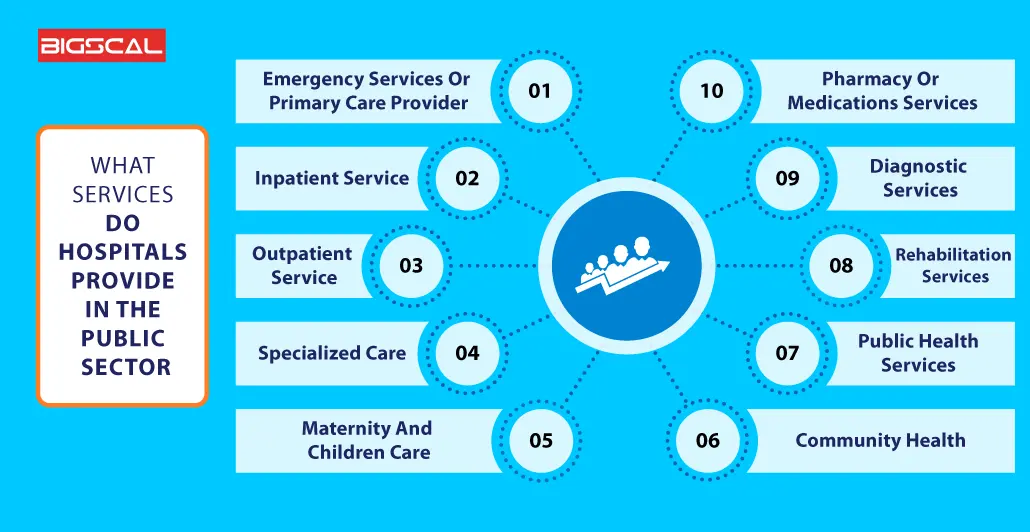
You all must know about public sector hospitals or government hospitals. but always be curious to know what do hospitals do. So, here is a list of various types of services and treatment you can get healthcare access from government hospitals at low cost than private hospitals.
Emergency Services Or Primary Care Provider
The urgency of emergency care that saves the life of a patient in the public hospitals is unparalleled to cases of heart attacks, accidents or injury. Aside from that, they’re a widely utilized ambulatory care facility, where an individual is not only able to get medical hospital services or vaccinations but can also be treated for common illnesses. As a result, people in every age group within a community have such health services that even the most critical of emergency services are available to them.
Inpatient Service
Inpatient services at public hospitals are where patients are admitted for overnights or rounds of treatment and stay for a while. Patient services in hospitals cover different categories of the health services, such as surgeries, post-operative care, chronic management through medication administration and others. Hospitals provide adjustable beds, rooms and a specialized medical staff or a treatment from doctor’ other to ensure the visitations of people and their health being taken care of for the recovering period.
Outpatient Service
The outpatient services provide emergency care without any need for the people to stay overnight. This includes everyday visits to the doctor, diagnostic tests sitting at the waiting areas for hours, and later a simple procedure of stitching, or vaccinations. Outpatient and general health care services operated by public hospitals are widely available to individuals according to their appointments that help to fight various health issues quickly and effectively, increasing people’s accessibility to health care.
Specialized Care
Two of the most important services that public hospital care offer are cardiology and neurology as well as oncology and other specializations. Such disciplines are populated by the professionals well versed in the specific diseases of concern. Developed cases of illnesses as well as chronic ailments can be handled using this service through specialized treatments, surgeries, and therapies to enhance their general well-being and quality of life.
Maternity And Children Care
Public hospitals provide many services for expectant mothers and children. Maternal services are a type of care that covers the delivery, postpartum care, and prenatal care phases. The main objective of these kinds of services is to provide good maternal and neonatal care at a lower cost. Treatment and prevention of child diseases in children’s hospitals include pediatric services, vaccination, and therapy provided for childhood. These services focus on comprehensive health and development of infants and kids. Therefore families can work and sleep knowing that something is done from their baby’s health when it comes to health.
Community Health
Public hospitals’ main focus is on community participation. It actively involves people in health programs that raise awareness, and people become more responsible for their health. Further, public hospitals organize wellness check-ups and screening camps. This helps doctors detect the disease at an early stage. They can time action to recover from the symptoms as early as possible.
Public Health Services Or Programs
Public hospitals in cooperation with the public health agencies aim to carry on the health care programs that enable the population’s welfare. These programs tend to encompass disease surveillance activity, immunization campaigns, and reaction against public health problems, like epidemics and pandemics. Public health facilities offering essential public health services are principal in preserving the health of the community that serves all the people and communities they serve.
Mental Health And Rehabilitation Services
Public hospitals offer services with mental health function in the treatment of people who are battling psychological challenges like depression in men, anxiety, or drug abuse. Along with that, they are contributors to the recovery process of patients from serious injuries or surgeries as they offer services like physical therapy, occupational therapy, and speech therapy. These services help patients in re-establishing their independence and enhance a positive feeling both mentally and physically.
When you integrate pharmacy systems with EHRs can help you automatically flag duplicate therapies and lessen medication errors before prescriptions reach patients.
What Services Do Hospitals Provide: In the Private Sector
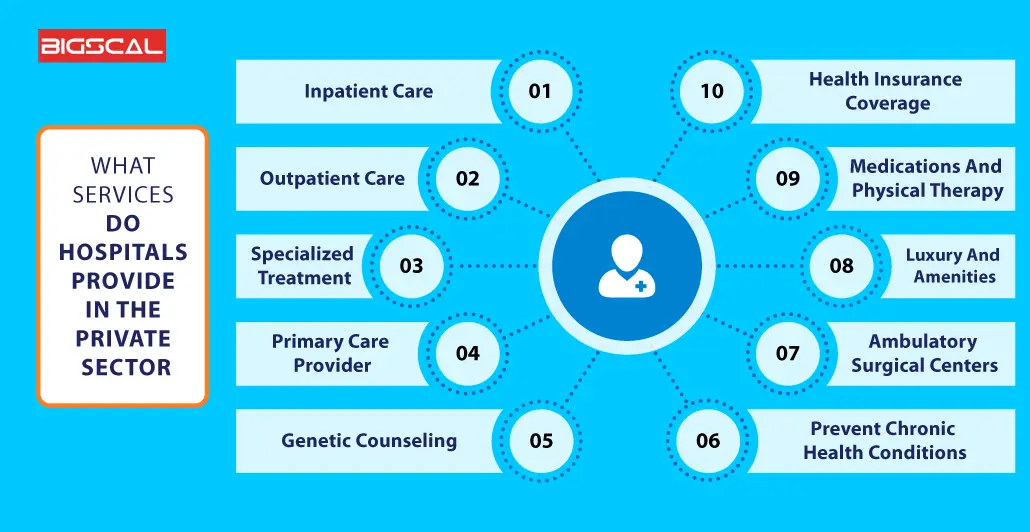
Talking about the Private hospitals, one thing that pops into our mind right away is that they will give their best medical services to their patients. To understand these hospitals service area we are going to make a point by point mention.
Inpatient Care
Like many public or governmental hospitals, New hospitals extend services to inpatients. That is to say, they care for patients who are in hospital for the night or have to stay longer term. Here, healthcare providers do open surgeries, complex procedures, provide treatments to severe patients, all requiring prolonged monitoring. One of the advantages of private hospitals in providing comfort to patients recovering from an illness, is the wide range of facilities a patient is offered from many private rooms and amenities to a dedicated medical team believing these patients deserve the best attention.
Outpatient Care
Outpatient treatment in private hospitals is an option whereby the patients do not have to stay overnight when they come in for this kind of care. It implies seeing a doctor, taking some diagnostic tests, and undergoing minor surgeries as well as different therapies. Patients can be seen at the hospital, have their medical treatment and be released from hospital all on the same day. Non-governmental hospitals are usually tailored to the efficiency and convenience of the outpatient services and this ensures that patients will access the quality health care services without the need for disrupting the normal ordered things.
Specialized Treatment
Ranging from the world-class amenities to specialized services in fields such as cardiology, orthopedics, oncology, and so much more, Private hospitals have received a reputation of exceptional service in these fields. These kinds of special divisions of hospitals are full of resident physicians who are experts in their specialties and equipped with advanced technology to provide the most efficient diagnostic and treatment for certain diseases.
For patients requiring super-specialized treatment, such as the use of sophisticated health technology and a team of professionals day and night will be of great help. Almost 8,500 hospitals were evaluated worldwide and 673 provide top-notch facilities for specialty domains like cardiology, oncology and orthopedics. Hence, this points out the emphasis on personalized care and cutting-edge treatments.
Primary Care Provider
Many private hospitals not only provide advanced treatment, but they also provide primary care as well, where patients can visit for their basic healthcare services. Private hospitals provide standard health check-ups. Hospitals usually offer all types of vaccinations to prevent diseases at an early stage. They focus more on proactive preventative wellness care services. This helps doctors detect and control diseases at an early stage.
Genetic Counseling
Genetic counseling is a service where experts analyze genes and family history and risks and guide patients to cure them in early stages. Hospitals provide options for different genetic tests. Further, Genetic counseling raises awareness and helps patients take their healthcare more seriously. Also, it emphasizes more preventive measures. This helps in minimizing future health side effects.
Basic Overview of Hospital Management Software
Hospital management software is an integrated digital system. It helps hospitals to efficiently manage their clinical and financial operations.
Key Features of Hospital Management Software:
- EHR (Electronic Health Records): Electronic Health Records software keep all the digital records of a patient, such as medical history, reports, medicines and treatment in a single dashboard.
- Inventory Management: it helps the team to manage all the information of inventory in a single dashboard. They can monitor and track every inventory resource.
- Pharmacy Management: Manages all the pharmacy-related information.
- Laboratory Information System (LIS): Patient and doctors can easily check lab results.
- Radiology Information System (RIS): Manages all the work of the radiology department and helps doctors to view all the x-ray reports online.
Digitize each hospital services with best technology
- Smarter integrated systems
- Better patient care
Telemedicine and Virtual Hospital Services: What Patients Can Access Online in 2026
Doctor Consultation At Doorstep
In 2026, patients can easily sit at home and consult their specialists. Patients can make their OPD experience smooth through video calls, digital medication orders and online documents. They no longer need to travel to consult their doctors.
e-ICU Monitoring: Remote Consultation of Critical Care
ICU monitoring is not just limited to hospitals for serious patients. e-ICU systems allow doctors to track multiple patients in real time. This makes the decision-making fast and improves treatment outcomes.
Virtual Follow-Up System
Patients still get care after they leave the hospital. Virtual follow-ups, wearable tracking and medication notifications ensure that recovery becomes smooth. Also, it lowers the likelihood of unneeded readmissions.
Mental Health Support
Mental health services are now readily accessible through the internet. Patients can connect with psychologists and psychiatrists without any hesitation. This reduces stigma and makes the treatment more readily accessible and convenient.
Rural Healthcare Boost
Telemedicine has completely transformed healthcare access in rural India. Previously rural areas lacked doctor consultations. Now, hospitals provide urban-level consultation to rural people. Also, rural patients can easily receive treatment advice from urban doctors without the need to travel miles.
Conclusion
As we are summing it up, I hope you now understand what services hospitals provide. Whether it’s private or government hospitals, they both provide numerous services to their patients. So, whether for routine check-ups or critical interventions, hospitals stand ready to serve or treat and safeguard our health.
FAQ
What are 5 examples of services that a hospital would provide?
Hospital offer a range of critical medical and surgical services, including:
- Emergency Care
- Surgery
- Diagnostic Imaging
- Maternity Services
- Inpatient Care
What are services in healthcare?
Healthcare services encompass a broad spectrum of medical and wellness offerings provided by healthcare professionals and facilities. These include preventive care, diagnostics, treatment, surgery, rehabilitation, mental health services, and home care, healthcare, and more. They aim to maintain and improve individuals’ health, diagnose and manage illnesses, and enhance overall health.
What services are typically provided by the healthcare industry?
The healthcare industry offers a wide array various types of services, such as:
- Primary Care
- Specialist Care
- Hospital Services
- Diagnostic Services
- Preventive Care
What are the 4 major services in healthcare?
- Preventive Care: Focused on disease prevention and wellness.
- Diagnostic and Treatment Services: Identifying and addressing medical conditions.
- Emergency Care: Immediate medical attention for critical situations.
- Long-Term Care: Ongoing care for chronic conditions and rehabilitation.
What are the 5 types of healthcare?
- Primary Care: General healthcare is provided by family doctors and primary care physicians.
- Secondary Care: Specialized care from specialists upon referral.
- Tertiary Care: Complex, advanced care from specialized hospitals or centers.
- Quaternary Care: Highly special care, often research-based.
- Home and Community Care: Care provided at home or in community settings, like nursing homes.