Hospital Management Software Features
Quick Summary: Hospital management software is not an option in 2026. It is an indispensable tool for all sizes of hospitals. It streamlines operations. HMS enhances patient treatment and ensures every department is utilizing the resources properly. Additionally, it offers data security and intuitive dashboards to help management make tangible decisions. Aiding decision-making. Today, we will explain all the main and common hospital management software features.
Introduction
As we all know, technology is revolutionizing every sector, and the healthcare sector is no exception. As we are moving forward towards an innovative world so fast. technology is drastically changing everything. Healthcare sector faces the challenging task of managing vast amounts of patient data, hospital operations, and medical records efficiently. This is where Hospital Management Software (HMS) steps in! There are many interesting hospital management software features.
If you are planning to develop hospital management software, you must know hospital management system modules and software features. And for this you don’t need to worry about it! We will explain every feature of HMS in this blog only.
So, keep reading!
What Is Hospital Management Software?
Before understanding the features, let’s first understand What is hospital management software? So, HMS you may also call it HIS (Hospital Information System). It is a transformative solution that changes the way hospitals operate. It’s not just the hospital management software development, it is a milestone of modern healthcare administration.
Additionally, the hospital management software solution streamlines the entire healthcare systems. It streamlines the entire operation. It simplifies the hectic process of patient enrollment. Eases appointment scheduling. And also reduce work pressure on the billing department.
Furthermore, this software enhances hospital management processes and the efficiency of healthcare professionals. With HMS, docs nurses can access patient data instantly. Which enables them for faster and more accurate diagnosis and treatments. Moreover, the medications become seamless, reducing the risk of errors. This translates to better patient outcomes and satisfaction.
HMS also helps in smooth management of inventory and financial data.
The Healthcare management system is really a very operational and tactical system and an amazing tool to manage hospitals and its tasks. So, Why wait when you can get numerous other benefits of hospital management by creating HMS, develop HMS now.
Some Popular HMS
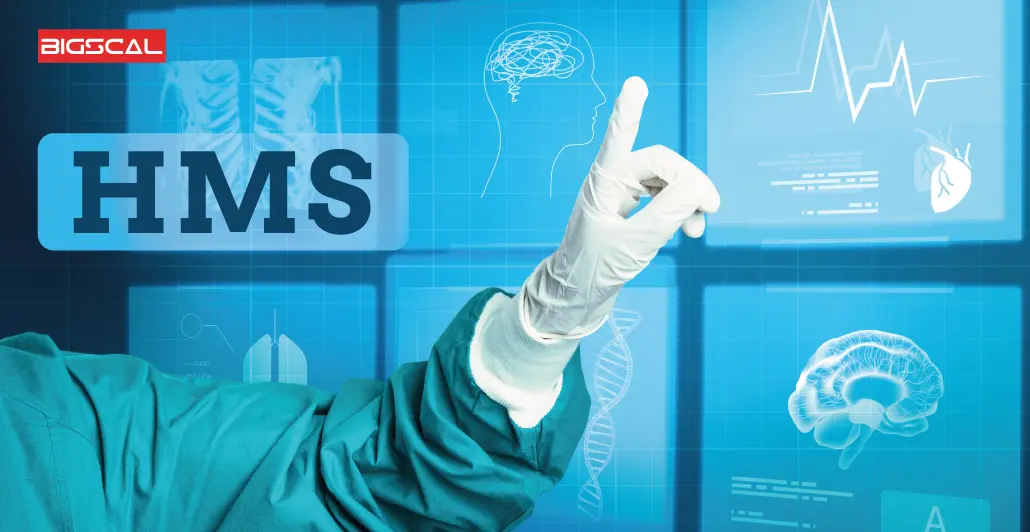
Let’s have a quick look at the popular Healthcare management software which include various types of HMS like hospital management system development. So, check them now:
Bigscal
Bigscal is a custom hospital management system development company that delivers dependable, HIPAA-approved digital solutions for healthcare facilities, clinics, pharmaceutical organizations, and healthcare tech startup companies.
Epic System
Epic is popular in large healthcare organizations. It offers a comprehensive suite of tools for EHR and EMR system revenue cycle management and patient engagement.
Cerner
Cerner provides EHR solutions and a range of healthcare management tools. It’s known for its interoperability and population health management capabilities.
McKesson
This software is for hospitals and health systems. It includes EHR, revenue cycle, hospital management software, and pharmacy management modules.
Athenahealth
Athenahealth focuses on practice management and medical billing software services. It’s commonly in medium medical practices.
Hospital Management Software Features
1.Features For Hospital Admin
Centralized Dashboard for Better Control
Modern Hospital Management System (HMS) provides a single dashboard to the admin. This helps admin handle multiple departments from a single system. OPD, IPD, billing, standard pharmacy, lab, staff attendance, and bed utilization—all data are visible to admin.
Big benefits:
- All data of OPD, IPD, invoice, laboratory, and pharmacy-related data in a single dashboard view.
- Real-time operational overview.
- Faster execution of decisions.
Result: Better control and smoother hospital management.
Automated Billing & Revenue Management
Manual billing errors are the main reason for billing errors. Further, HMS simplifies the billing & revenue management process.
Key advantages:
- Automatic charge capture system
- Faster insurance claim handling
- Lower % of billing mistakes
Result: Less revenue leakage and better financial tracking.
Smart Staff Scheduling
Staff management is one of the biggest operational challenges.
HMS helps with:
- Demand-based time management
- Shift management automation
- Overtime reduction
Result: Better workforce productivity and lower operational stress.
Inventory & Pharmacy Management
It is highly challenging for the admin department to manage medicine and medical supply tracking.
HMS helps through:
- Low-stock notifications
- Expiry date monitoring
- Centralized inventory surveillance
Result: Minimized wastage and continuous, uninterrupted supply management
2. Hospital Management Software Features For Doctors
AI-Assisted Documentation
Doctors spend their significant time in patient notes and documentation. Further, Modern HMS AI-powered documentation tools convert all the consultation dialogues with patients into well-organized medical notes.
Key benefits:
- Automatic SOAP note formation
- A decrease in manual typing
- More rapid document updates
Overall, HMS helps doctors to focus more on patient care.
Ambient Scribing Technology
In 2026, ambient scribing is a major upgrade in healthcare workflows.
HMS tools can:
- Listen patient-doctor conversations
- Helps doctors create real-time clinical notes
- Reduce Charting backlog
Additionally, HMS provides stress-free consultation to doctors and elevates the effectiveness of the practices.
Integrated Workflow Experience
Doctors no longer need to open multiple software or applications. Modern HMS provides a connected workflow system where every tool is available on the same platform.
Integrated modules comprise the following:
- EHR accessibility
- Billing assistance
- Lab integration standard
- Pharmaceutical collaboration
Overall, HMS delivers smooth operations and better performance.
Clinical Decision Support
Doctors need instant clinical insights for making immediate and valid decisions.
HMS provides:
- Drug interaction notifications
- Evidence-based treatment recommendations
- Risk score updates
Additionally, HMS helps doctors make safer and smarter clinical decisions.
3. Hospital Management Software Features For Patients
Online Appointment Booking
In 2026, patients are expecting quick and easygoing appointment scheduling. Modern HMS patient portals provide 24/7 access to online booking services.
Key features:
- Anytime appointment setting up
- Doctor accessibility review
- Immediate booking verification
Overall, HMS reduces waiting time and provides outstanding convenience.
Mobile-First Patient Experience
Nowadays, patients mostly prefer smartphones to consult with their doctors. modern HMS platforms focus on mobile-friendly layouts.
Mobile features include the following:
- App-based accessibility
- Mobile bill payment procedures
- Instant messages
- Digital medication prescriptions
Overall, HMS provides smooth healthcare access from anywhere.
Medication & Follow-Up Reminders
Most patients fail to take their prescriptions and follow-up appointments on time. HMS sends automated reminders to patients if they miss their prescription or are unable to follow up with their specialist due to a preoccupied schedule.
System reminders help with:
- Medicine schedules
- Provides upcoming appointments
- Vaccination notifications
- Follow-up care messages
Overall, HMS helps patients to properly follow their healthcare regimen and improve their outcomes.
Multilingual & Accessible Platforms
Multilingual support is critical in India’s healthcare sector. Further, modern HMS provides multilingual interfaces.
Accessibility improvements include:
- Regional language assistance
- A basic user interface
- Easy navigation for first-time users
Overall,HMS provides easy access to all patient groups.
Why a One-Size-Fits-All Approach No Longer Works
Traditional hospital software is usually constructed for administrators and IT teams. Traditional software ignores daily user needs. That’s why hospitals should not decide on a one-size-fits-all strategy in 2026. They should concentrate primarily on the following:
User-Centric HMS Design
Modern HMS platforms are focusing on a user-centric approach.
Focus areas include:
- Simple workflows
- Easy navigation
- Role-based dashboards
Result: Hospital management software features provide better usability and higher staff productivity
Different Users, Different Needs
In a hospital ecosystem, every user has a different workflow. A single interface is not an effective option for all.
Different stakeholders include:
- Hospital administrators
- Doctors and nurses
- Patients
- IT and management teams
Result: Hospital management software features provide personalized workflows and smoother operations.
Role-Based Dashboards & Access
In hospitals every user requires different information. HMS provides role-based access controls.
Examples include:
- Admin can view the financial report.
- Doctors can access clinical records easily.
- Patient can easily view their reports and bills.
Better Technology Adoption Across Hospitals
If software is difficult, then staff adoption may get low. User-friendly HMS reduces both training and resistance.
Modern systems focus on the following:
- Intuitive interfaces
- Minimal learning curve
- Cross-device accessibility
Why are Leading Hospitals Reconsidering The Gaps and Benchmarks in their HMS Feature Stack?
Increase In The Demand Of Smarter HMS
In 2026, top hospital software system are replacing their old HMS hospitals, as traditional software is not properly supporting AI procedures, predictive data analysis, and connected healthcare operations.
Better Efficiency Benchmarks
Modern HMS helps hospitals to achieve faster coordination, fewer duplicate tests, and lower administrative workloads. AI scheduling and automation help medical centers elevate their efficiency.
Unified Records And Integration
Hospitals are now preferring platforms that support FHIR and HL7 standards. Connected systems are capable of sharing patient records. Also, make the treatment workflow highly smooth.
Need of AI & Automation Features
Modern healthcare providers are looking for AI standard documentation, voice-enabled procedures, predictive alerts, and patient analytics. HMS helps hospitals deliver faster and smarter patient care.
Conclusion
User-friendly hospital management software features help doctors, nurses, and patients to improve their workflows. In 2026 ,hsopita are investing in scalable and data-driven HMS platforms. Healthcare providers are now choosing features that improve efficiency, reduce operation cost and deliver better patient experience. Platforms like Bigscal help hospitals easily handle medical services demands, compliance requirements, and operational growth.
FAQ
What are the top hospital management companies?
Some of the top hospital management companies include HCA healthcare, Tenet Healthcare, Universal Health services (UHS), and community health systems. These companies manage and operate numerous hospitals and health care facilities across the US. They provide a great many medical facilities and services to their patients.
which software is used in hospitals?
Well, hospitals use various types of software to keep hospital data and manage their operations. These include, EHR systems like Epic, Cerner, and Allscripts are common patient records. Hospital management system (HMS) such as Meditech and McKesson handle administrative tasks. Additionally, PACS manage medical image data.
What is hospital management called?
Hospital management AKA healthcare administration or healthcare management, encompasses the planning, coordination, quality control, and oversight of all aspects of a hospital’s operations. These tasks involve administrative tasks, financial management, human resources, patient care, and facility maintenance to ensure efficient and effective healthcare delivery within a hospital.
Which model is best for hospital management system?
The best model for a hospital management system depends on various factors, including the hospital size, requirements, and budget. Some popular options include open-source systems like OpenMRS for flexibility and customization, or commercial solutions like Epic or Cerner for comprehensive features. The choice should align with specific hospital needs and resources.
What are 3 types of clinical information systems?
- EHRs
- CPOE systems
- digital sources of medical evidence