Choosing the Best Hospital Management Software: A Comprehensive Guide
Quick Summary:Selecting the best hospital management software needs immense effort. It is not an easy task for healthcare institutions. Hospitals need to consider many essential points before buying it. This comprehensive guide provides you powerful insights to select the right HMS software for your healthcare organizations. Hospitals can make tangible decisions by analyzing these useful insights. Keep reading!!
Introduction
Having the best hospital management software is one of the crucial ways that can enhance the productivity of hospitals. When everything depends upon the credibility of the hospital management software, there’s no way that you can settle for a less efficient solution.
But how can you tell which is the best hospital management software? This blog has a list of key considerations that can help you when you are looking for top 10 hospital management software in India or other countries.
What is Hospital Management Software?
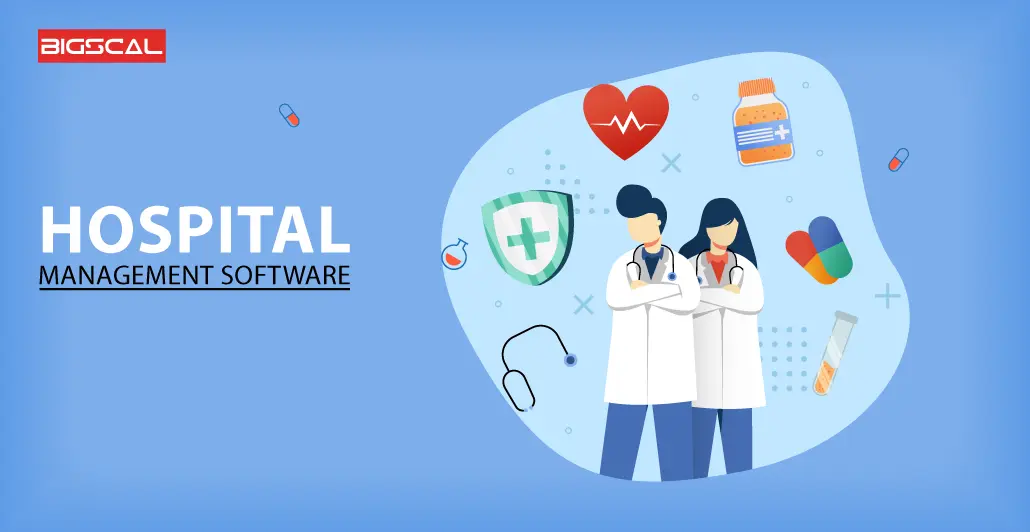
As per reports, healthcare workers tend to spend 35% of their daily time on documentation of patients’ data. Although it’s almost impossible to avoid paperwork, you can automate it and reduce the burden on the doctors and staff.
Not only document and patient record management but there are plenty of other works that happen parallelly in a hospital. Therefore, getting the best hospital management software can manage and process all of them. It can be used to simplify activities such as:
- Managing patient records
- Tracking and managing appointments
- Managing records of staff
- Insurance claims and billing
Hence, Hospital workflow automation tools can enhance patient care and improve the overall quality of services. Moreover, it can also be employed to minimize operational costs and improve the revenue cycle.
Therefore, hospital management systems (HMS) can create a frictionless approach that helps in managing hospitals and operational complexities.
The hospital management system is helpful, but it is complex. Hence, to make it easier to understand and implement, they divide it into different modules. Moreover, these modules are built upon the needs of the department and its process. Let’s take a closer look at the benefits and tips to choose the best hospital management software.
Read more: Patient Journey Management Software: Why Hospitals Need It
Why Your Hospital Needs HMS In 2026
In 2026, the healthcare industry is becoming digital. Patients prefer online platforms to consult their specialists. Hospitals are facing challenges with rising patient loads. staff shortages are making the system practices slow. High compliance pressure and operational overhead are other challenges. Manual systems and paper-based workflows are incapable of handling modern healthcare demands . Hospital Management System helps doctors make the medical practices more accurate, faster, and more organized operations. Let’s check why hospitals need HMS in 2026:
Reduces Manual Work And Paperwork
In traditional hospitals, paperwork and manual entries consume considerable time.
Hospital management software can automate the following:
- Patient registration.
- Appointment scheduling.
- Billing processes.
- Medical record management.
Overall, HMS helps staff minimize repetitive tasks and focus on patient care.
Improves Patient Experience
In 2026, patients are expecting fast and hassle-free healthcare services. HMS makes the patient journey smooth.
Features include:
- Faster check-in process.
- Online appointments.
- Digital prescriptions.
- Quick access to reports.
- Transparent billing.
Overall, it reduces waiting time and improves patient satisfaction.
Enhances Real-Time Decision-Making
Modern HMS provides real-time data access. This helps hospital management and doctors to make concrete decisions.
Doctors can instantly access the following:
- Patient history.
- Lab reports.
- Medication records.
- Bed availability.
Overall, HMS supports faster diagnosis and better treatment planning.
Reduces Billing Errors And Revenue Leakage
In a manual billing system, mistakes and missed charges are common. HMS automates billing and financial workflows.
HMS helps in:
- Accurate invoice generation.
- Insurance claim management.
- Revenue tracking.
- Payment reminder.
Overall, this strengthens the revenue cycle and reduces financial losses.
Better Medication and Inventory Management
It is essential for hospitals to accurately manage medicines and medical supplies. HMS simplifies the inventory tracking.
It helps in:
- Medicine stock monitoring.
- Expiry tracking.
- Pharmacy integration.
- Automated reorder alerts.
Additionally, HMS minimizes the medication errors and stock shortages.
Helps Hospitals Scale for Future Growth
As the hospital expands, operations and data complexity become difficult. HMS provides scalable infrastructure.
System provide support in:
- Multi-branch management.
- Growing patient databases.
- Telemedicine integration.
- AI-powered analytics.
Top 3 Advantages of the Best Hospital Management Software
Better Patient Care
Hospital management software operates in correlation with electronic health records (EHR) to enable healthcare systems to have quick access to patient records. Hence, this will ensure accurate diagnosis and treatment. It lets doctors select a relevant treatment with fewer chances of human error.
Also, having unified data can reduce the paperwork and administrative burden. Therefore, comprehensive hospital management software can give professionals time to interact with patients.
Without patient care facilities, it would be hard for healthcare institutions to run and grow their revenue. Mainly it happens due to poor communication, long waiting lines, and in-efficient operational systems. For extensive or coordinated care, the hospital management software offers a variety of functions; let’s have a look:
- Appointment scheduling
- Video consultation
- Safeguard information
- Error management
- Integrated system
- Reminders and alerts
Streamlined Overall Efficiency
Hospital management systems work on data collection and allocation of rational informational resources. Hence, it can smartly distribute information in segments. Having automated data management can eliminate manual data entry, streamline the workflow and minimize patient waiting time.
Hence, in this manner, software used in healthcare services can ensure better satisfaction among patients and can simplify client flow for the medical staff.
Enhanced Data Processing
The information that hospitals collect from patients is highly sensitive and needs solid cyber protection. As hospital information systems are data-dependent, they should be designed with the best data protection policies.
Healthcare software providers make solutions that follow required regulations such as HIPAA and GDPR to abide by business responsibilities. This method allocates data access according to managerial roles and incorporates state-of-the-art encryption techniques.
Hence, these solutions also offer consistent security updates to hospital staff management, enabling medical organizations to monitor data processing efficiency effectively.
How Hospitals Can Evaluate Whether a Vendor’s Software Fits Existing Workflows
Hospital management software must be compatible with the current workflow. If HMS makes the daily operation complicated. This will negatively impact staff productivity and patient care. Therefore, before selecting the best hospital management software, practical workflow evaluation is equally important.
Properly Map the Current Workflows
Before initiating the evaluation, hospitals should clearly document their existing workflows.
This includes:
- Patient registration.
- OPD/IPD management.
- Billing process.
- Lab workflows.
- Pharmacy operations.
- Discharge procedures.
Workflow mapping helps hospitals determine whether new software will support the new process or disrupt it.
Conduct Scenario-Based Demos
Simple sales presentations will not reflect real hospital situations. Hospitals should demand real workflow demos from vendors.
For example:
- Emergency patient admission.
- Surgery package billing.
- Insurance claim workflow.
- Lab report processing.
Additionally, real scenarios clearly reveal the practical usability of the system.
Verify Existing System Integrations
The best hospital management software should efficiently integrate with existing healthcare systems.
Ensure compatibility with:
- EMR/EHR systems.
- LIS (Lab Information Systems).
- PACS imaging systems.
- Pharmacy software.
- Finance and billing platforms.
Additionally, strong integration saves the staff from multiple logins and manual transfer.
Evaluate Customization And Configurability
Every hospital workflow is slightly different. Flexible software simplifies the future adjustment.
Ask vendors about:
- Customizable forms.
- Workflow configuration options.
- Department-specific settings.
- Rule-based automation flexibility.
Overall, a configurable system improves long-term operational fit.
Measure Time Efficiency
Hospital workflow should be fast and efficient. Hospitals should evaluate the following:
- Patient registration time.
- Billing transaction speed.
- Report generation time.
- Discharge completion process.
Moreover, if a hospital slows the workflow, then adoption will create challenges.
Analyse Change Management Impact
New HMS implementation impacts the staff routines. Therefore, it’s highly crucial for hospitals to evaluate change management.
Hospitals should check the following:
- Training requirements.
- Learning curve for staff.
- Ease of onboarding.
- Transition support provided by vendor.
Overall, hospitals should not just rely on features while selecting the best hospital management software. Further, they should also evaluate real workflow compatibility, usability, integration capability, and operational efficiency.
How to Evaluate and Shortlist Healthcare Software Vendors
Selecting the best hospital management software is a highly important decision for hospitals. In 2026, attractive demos are not sufficient. Hospitals need to evaluate practical performance and support quality, compliance, and long-term costs. It can help you decide whether to choose hospital risk management software or some other solutions. Hospitals need to evaluate various factors to select the best hospital management software.
Create Clear Requirements Matrix
Before selecting the vendors, the hospital should first evaluate their exact needs. Further, the hospital should divide the requirement into three categories:
- Must-have features.
- Important features.
- Nice-to-have features.
Next, hospitals should assign weight to every category and then score the vendors. It helps hospitals in unbiased and structured comparison.
Check Vendor Experience And References
Evaluating the experience is a crucial factor in the vendor selection process. Check the following:
- Similar hospital projects.
- Specialty-specific experience.
- Existing client references.
- Case studies and success stories.
Conduct Real Workflow PoC
There is a great difference between Sales demo and real hospital operations. Therefore, a structured Proof-of-Concept is highly important for hospitals.
Test the following in PoC:
- Patient registration workflow.
- Billing process.
- Appointment management.
- Clinical documentation speed.
Additionally, hospitals should collect the real feedback of hospital staff to finalize their decisions.
Evaluate Support and SLA Quality
Healthcare systems operate round the clock; therefore, vendor support is extremely important.
Ask vendors about:
- After-hours technical support.
- Emergency response time.
- Escalation process.
- Dedicated account manager availability.
Moreover, fast support reduces downtime and operational disruption.
Compliance And Security Capabilities
Patient data security is the critical part that hospitals should follow while selecting the best hospital management software.
Ensure vendor provides:
- HIPAA-like compliance support.
- Data encryption.
- Audit trails.
- Role-based access controls.
- Secure cloud infrastructure.
Overall, strong security reduces the future compliance risks.
Analyse Total Cost of Ownership (TCO)
Software licence fee is only the initial cost. It is highly imperative for hospitals to evaluate long-term costs.
A 5-year TCO must include the following:
- Implementation cost.
- Data migration charges.
- Staff training expenses.
- Support and maintenance fees.
- Infrastructure costs.
- Custom integrations.
Additionally, transparent pricing vendors are highly trustworthy.
Prioritize Staff Feedback
End users use the software daily. Therefore, their feedback is highly valuable. Collect feedback from:
- Doctors.
- Nurses.
- Front-desk teams.
- Billing staff.
- IT department.
Additionally, a user-friendly system improves adoption rate and operational efficiency. Overall, successful vendor shortlisting depends on structured assessments, real-world testing, strong support evaluation and long-term scalability assessment.
Conclusion
Choosing the best hospital management software is a critical decision for hospitals’ future growth and patient care strategy. A good HMS doesn’t just digitalize the existing process but also makes it faster and simpler.
Platforms like Bigscal offer most user-friendly hospital management software development. Bigscal provides a holistic solution that improves efficiency, patient care, and data security. Moreover, it also promotes integration and ease of use within healthcare institutions.
FAQ
What medical billing software system do most hospitals use?
Most hospitals commonly use Electronic Health Record (EHR) software systems for managing patient data and healthcare records.
Which model is best for a hospital management system?
The best hospital management software depends on the specific needs of the hospital. Some popular models include cloud-based systems, on-premises solutions, and integrated healthcare information systems.
What operating systems do hospitals use?
Hospitals typically use a variety of operating systems, including Windows and Linux. These are common choices for server infrastructure and Windows and macOS for administrative and user-end tasks.
What are PM systems in healthcare?
PM systems in the healthcare sector refer to Practice Management systems. These systems help healthcare providers manage administrative tasks like scheduling, billing, and patient registration to streamline operations.
What systems do hospitals use?
Hospitals use a range of systems to manage different aspects of healthcare delivery and operations, including:
- EHR (Electronic Health Record) systems,
- Laboratory Information Systems (LIS),
- Radiology Information Systems (RIS), and
- Hospital Information Systems (HIS).